

The automation landscape is evolving so fast and in today's scenario choosing the right automation tool can feel a bit complicated. Make.com that was formerly known as Integromat is a famous tool that offers great flexibility and visual workflow builder. But when teams expand and automation needs of companies grow more complex, users often tend towards better alternatives that are perfectly aligned with their budget and goals.
If you're one of them, this article will help you in exploring real world Make Alternative platforms that offer great customization and intelligent automation capabilities.
Why Look for a Make Alternative?
Although Make offers its users incredible flexibility and visual workflow design, when teams grow and their automation needs become more advanced, some challenges tend to surface:
- Pricing: When the number of executions or operations increases, the cost increases very quickly.
- Complexity: Make is powerful, but its interface can be quite overwhelming for non-technical or new users.
- Performance: Large workflows with multiple branches may experience execution delays.
- Enterprise features: Governance, API orchestration, and audit controls are limited in comparison to newer automation platforms.
- Self-hosting: Make is fully cloud-based. No open-source or on-premise version is available.
If some of these limitations sound familiar to you, here are some worthy Make alternatives that you can try.
Overview of the best Make alternative platforms
- GoInsight.AI - Best for enterprises that need AI-powered, large-scale automation with security controls.
- Zapier - Best for small and mid-sized teams that prefer ready-to-use integrations and no-code experience.
- Workato - Best for high-compliance enterprises needing robust governance, audit controls, and secure hybrid integration.
- n8n - Best for big, hybrid teams who want full control and open-source flexibility.
- Microsoft Power Automate - Best for organizations heavily invested in the Microsoft ecosystem that require native depth and RPA capabilities.
- Stack AI - Best for teams building workflows that combine automation with machine learning capabilities.
Top 6 Make Alternative Tools
1GoInsight.AI
GoInsight.AI isn't just another ordinary workflow automation platform. It offers its users the next stage of enterprise automation, combining intelligence, collaboration and security in one unified system. Known as an AI-augmented enterprise OS, it enables organizations to build, deploy, and evolve intelligent workflows that connect people and AI in real time.
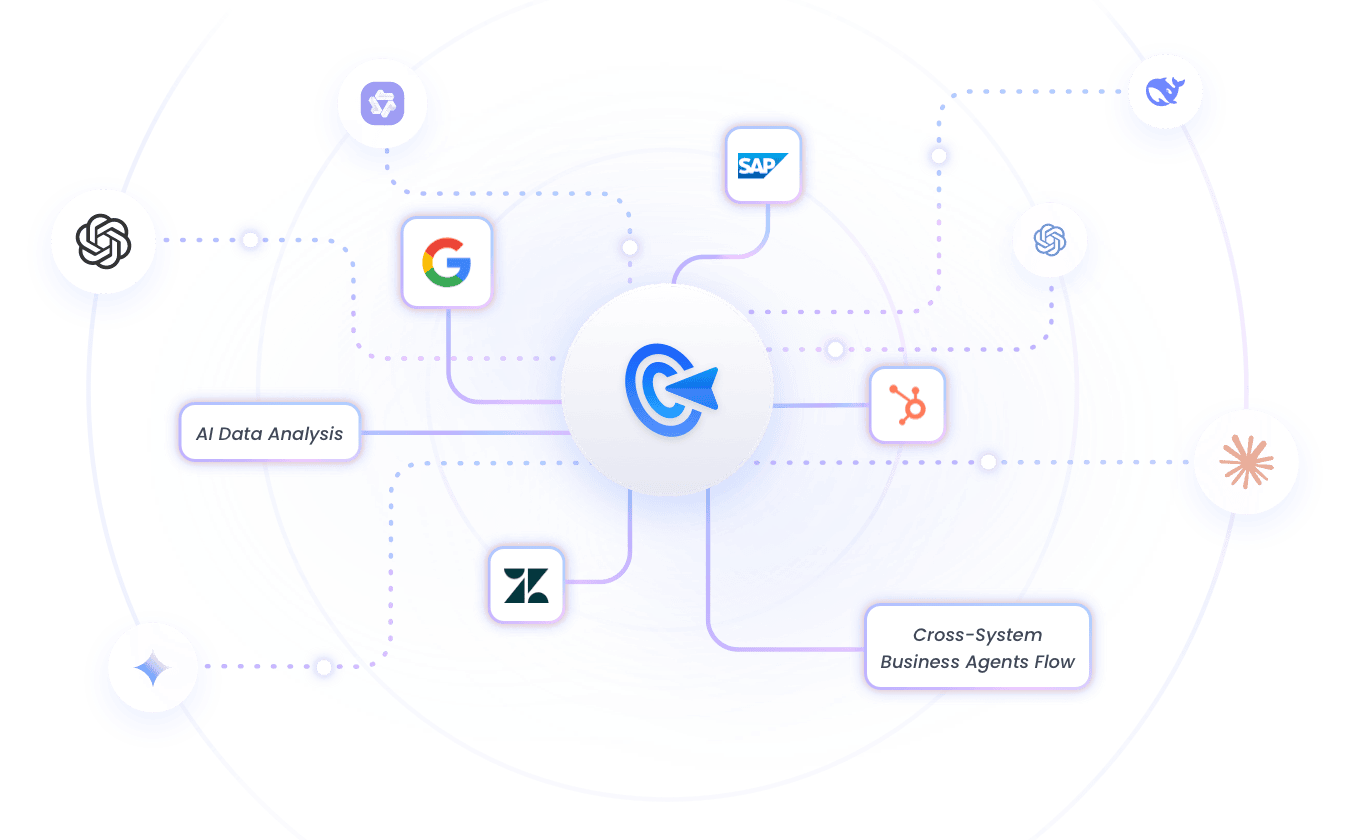
With the help of its visual drag and drop builder, users can easily automate end to end processes and integrate data from multiple systems. You can even embed AI-driven steps for decision-making, classification, or task handoffs.
Pros
- Native AI steps for intelligent, adaptive workflows.
- Built-in compliance, governance, and data control.
- Enables deployment of reusable AI agents and enterprise apps.
- Strong visual builder and enterprise-grade reliability.
Cons
- Tailored mainly for enterprises and larger organizations.
- Requires onboarding to leverage advanced AI capabilities.
- Smaller integration ecosystem compared to Make.
2Zapier
Zapier is a workflow automation tool that helps you connect thousands of apps making it suitable for users who want to streamline processes without writing any code. Non technical users can easily use it due to its simple and intuitive interface.
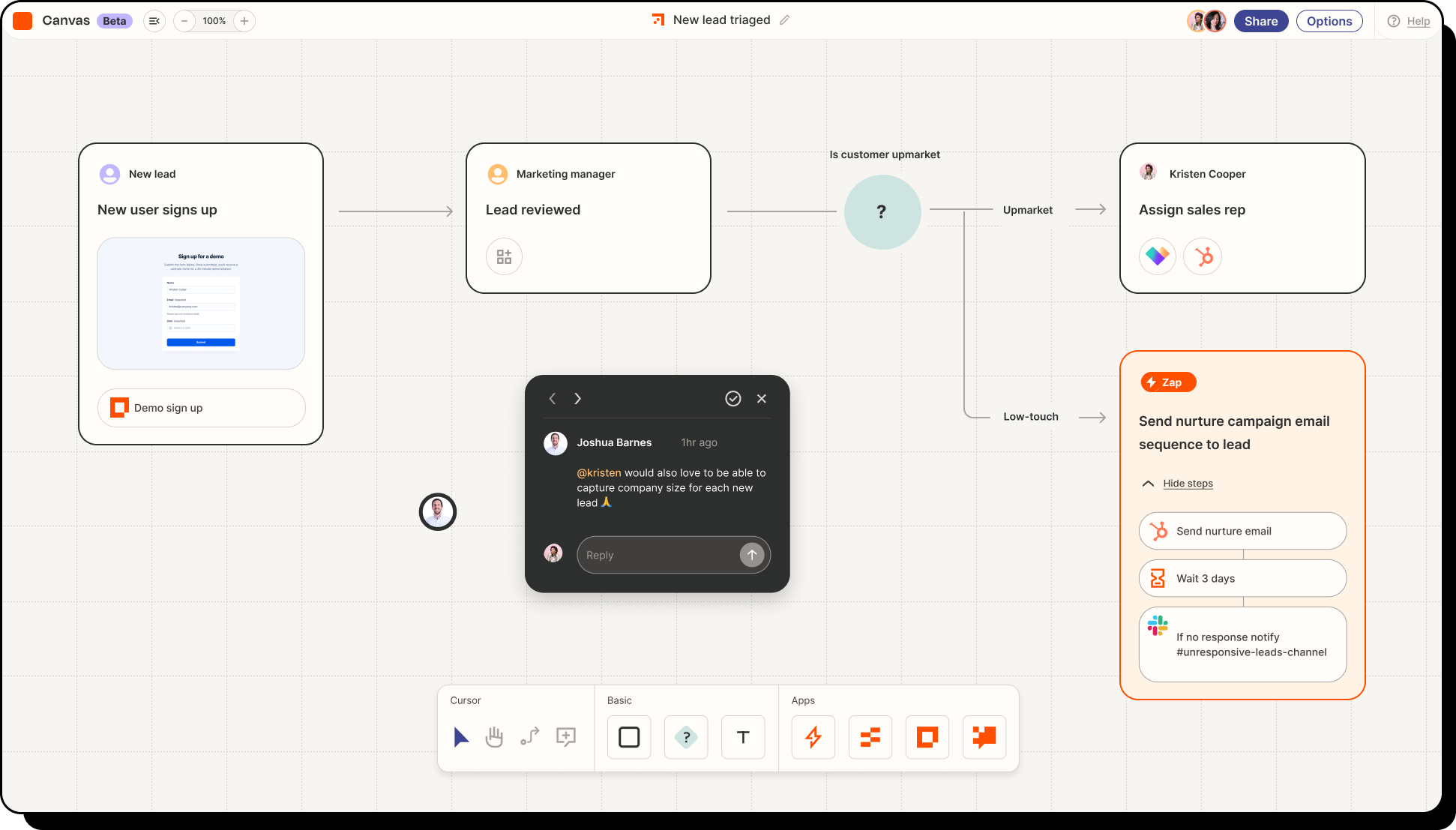
Its main feature is its automation ability that allows you to automate multi-step workflows. You can even automate complex processes without much manual intervention.
Pros
- You can do integrations with tons of existing tools, including Slack, Salesforce and Google Workspace.
- Availability of LLM features for AI-powered automations.
- User-friendly, simple and easy to understand interface.
Cons
- It can become costly if you need more automations.
- Its advanced features might feel a bit complicated for beginners.
3Microsoft Power Automate
Microsoft Power Automate is key for intelligent workflow automation within organizations using the Microsoft 365 stack. It offers deep, native integration into Azure, SharePoint, and Dynamics for seamless business process orchestration. This connectivity allows complex, multi-system workflows to run with enterprise-grade security and reliability.

It combines Cloud Flows with robust RPA (Desktop Flows) and the AI Builder for smart data handling. This enables businesses to automate tasks and apply AI logic across both cloud and legacy desktop applications.
Pros
- Cost-effective for existing Microsoft 365 license holders.
- Easy, straight forward interface.
- Great for social media, notifications, and everyday tasks.
Cons
- Limited customization and branching logic.
- Not suited for complex business processes.
4n8n
n8n has been around for a while, but its Cloud version has truly elevated what open-source automation can achieve. Unlike many visual builders that hide complexity, n8n gives users full transparency and control over how data moves through each workflow.
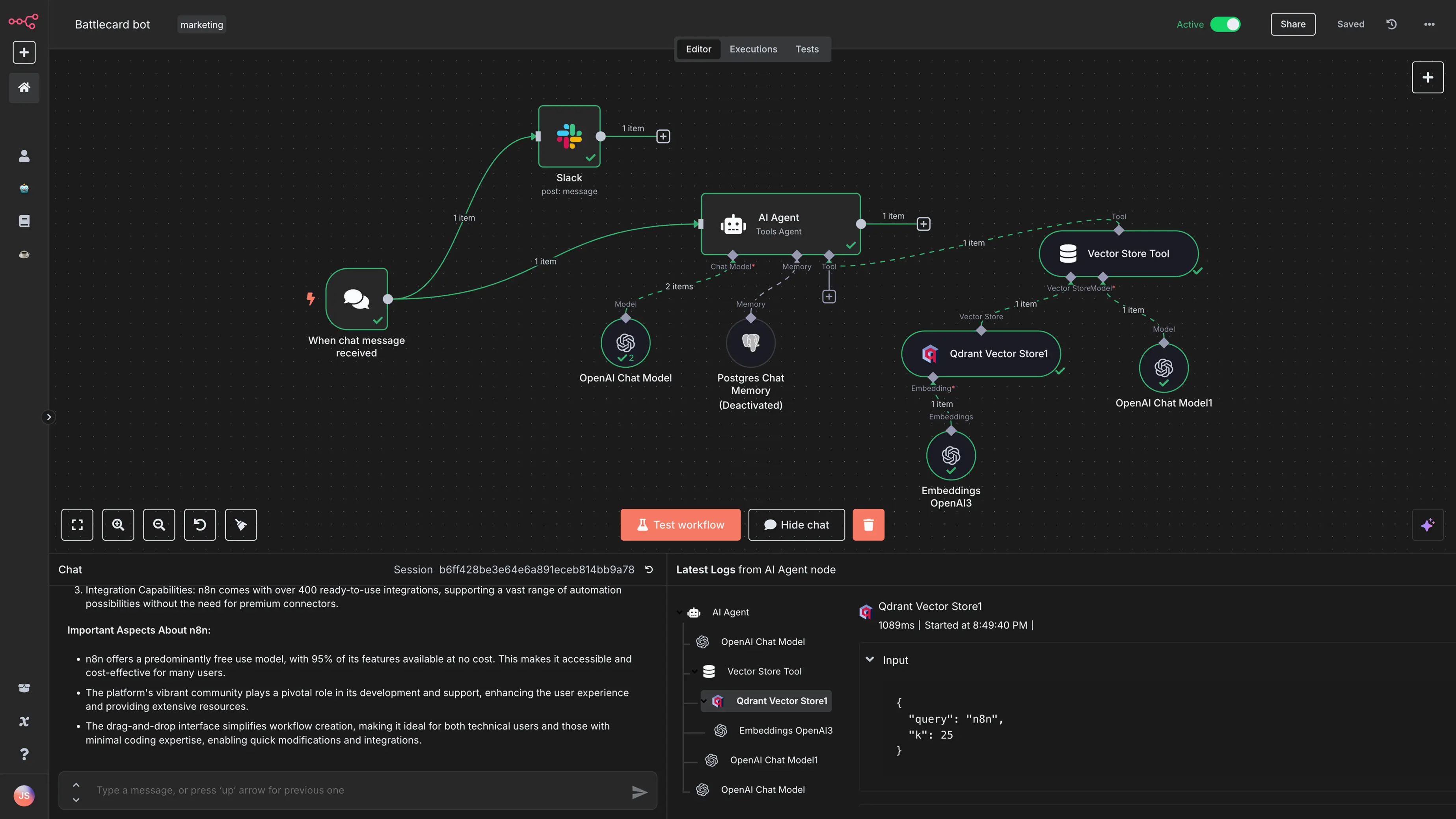
With its fair-code licensing model, teams can self-host or opt for the managed cloud service, both offering nearly identical functionality. Developers appreciate its flexibility, while non-technical users enjoy the visual node-based builder that simplifies even the most advanced automations.
The key strength of n8n lies in its balance between openness and usability. You can integrate your CRM, connect custom APIs, or even embed machine learning models, all inside one flow.
Pros
- Transparent and highly customizable with fair-code licensing.
- Thousands of pre-built nodes and strong community support.
- Option to self-host or use a managed cloud version.
- Supports complex branching, loops, and conditional logic.
- Regular updates and an open ecosystem.
Cons
- It takes time to master advanced features.
- Interface can feel dense for first-time users.
- Some integrations require manual setup.
5Workato
Workato is the enterprise iPaaS that tackles your most critical business automation challenges at scale. It specializes in complex, high-volume workflows, meeting strict demands for governance and audit controls. IT and Operations teams rely on it to reliably automate core areas like finance and supply chain.
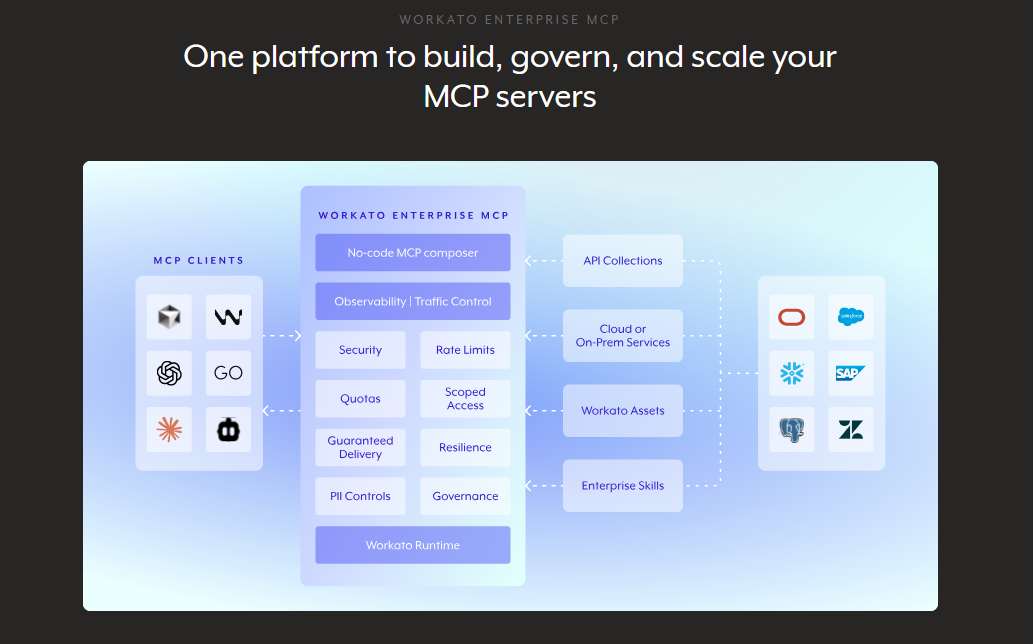
The platform connects cloud systems and on-premise apps securely using Hybrid Agents for full integration. Workato's "Recipes" use AI-driven workflow assistance and automatically handle errors for guaranteed resilience. This ensures intelligent automation is delivered consistently across your entire business landscape.
Pros
- Offers robust governance, audit trails, and version control.
- Features hybrid connectivity for cloud-to-on-premise systems.
- Extensive library of enterprise connectors (SAP, NetSuite).
- Great for small and medium businesses.
Cons
- Expensive, tailored only for custom enterprise budgets.
- Steeper learning curve compared to Zapier.
- Overly complex and costly for simple, low-volume automations.
- Full feature deployment often requires IT team involvement.
6Stack AI
Stack AI is a specialized no-code/low-code platform focused on building, deploying, and monitoring custom AI agents, not just connecting apps. While most competitors offer AI features within a workflow, Stack AI provides the core tools to orchestrate Large Language Models (LLMs) with your company's proprietary documents and data sources.

It allows teams to easily construct complex Retrieval-Augmented Generation (RAG) systems, powerful chatbots, and document intelligence workflows using a drag-and-drop canvas. Its strong emphasis on security, compliance, and governance makes it the premier choice for large enterprises in regulated industries like finance and healthcare that need to embed secure, reliable Generative AI into their core operations.
Pros
- Dedicated platform for building advanced AI agents.
- Enterprise-grade security and compliance (HIPAA, SOC 2).
- No-code visual builder for complex AI pipelines (RAG).
- Offers on-premise and private cloud deployment.
- Responsive support and community feedback.
Cons
- Fewer general SaaS app integrations than Zapier or Make.
- Steeper learning curve for mastering AI agent orchestration.
- Limited error-handling customization.
Final Words
So, what's the verdict? You now have a powerful set of Make alternatives, each perfectly tailored to a different business challenge. The era of simple task routing is over—it's time to choose a specialist.
For pure speed and quick setup, Zapier is still the fastest bet. If you need total control and open-source flexibility, n8n Cloud has your back. But when you hit true enterprise scale, you need platforms built for the big leagues: Workato for compliance, Power Automate for the Microsoft world, and Stack AI for custom AI agent building.
Ultimately, GoInsight.AI remains the platform looking furthest ahead. It moves you past automating tasks to truly building an intelligent, adaptive digital workforce your business needs to finally scale.





Leave a Reply.