

According to Salesforce, sales reps spend nearly 70% of their time on non-selling tasks like data entry and internal coordination. This heavy manual workload causes resistance to CRM systems, and many teams still view "automation" as just mass emailing.
True sales automation goes far beyond that. CRM systems have the power to help sales teams build systems that think, adapt, and work together to drive growth.
However, unlocking that potential requires overcoming structural hurdles first. Rather than listing specific features, this article focuses on the actual obstacles of scaling your CRM sales automation. And we will close with a brief review of three mainstream CRM platforms.

Three High-Performance Drivers of CRM Sales Automation
There are 3 key areas where sales teams can reclaim time and improve conversion efficiency: intelligence, speed, and continuity.
1. Automated Lead Intelligence
One of the biggest inefficiencies plaguing sales teams is starting from zero with every new lead. Modern CRM solutions remedy this by automatically enriching lead data the moment it enters the system. Instead of manually researching prospects, reps get a clear overview of:
- Company size
- Industry
- Existing tech stack
- Recent activity or growth signals
For example, HubSpot's acquisition of Clearbit in 2024 highlights how critical this capability has become. By combining CRM functionality with Clearbit's real-time data enrichment, sales teams can automatically populate detailed company and contact profiles without any manual input or research.
💡Clearbit's approach to first-party intent data allows teams to identify detailed information on which companies are actively engaging with high-intent pages, such as pricing or product features, directly within the CRM. This means reps are no longer just seeing who a lead is, but also what they're doing and how ready they are to buy instantly.
2. Intent-Based Lead Routing
Speed is an integral, but often overlooked, factor in sales performance. When a prospect shows buying intent by requesting a demo or visiting pricing pages, response delays can cost deals. Traditional sales workflows are staggered and typically rely on manual assignment, which can take hours.
According to LeanData, 78% of customers go with the first company that reaches out and addresses their inquiry. Intent-based routing removes that lag entirely.
By analyzing user behavior in real-time, CRM systems can:
- Identify high-intent prospects instantly
- Automatically route them to the right sales rep based on territory or expertise
- Trigger immediate actions like meeting scheduling
For example, platforms like Chili Piper are built around reducing speed-to-lead from minutes and hours, down to seconds. Instead of placing prospects in a traditional follow-up queue, Chili Piper allows them to instantly book a meeting with the right sales rep the moment they submit a form.
💡With automated routing in place, the same lead is immediately qualified, assigned, and connected, often before they even leave the website.
3. Seamless Knowledge Transfer
Sales processes don't happen in isolation; deals often move across multiple touchpoints, from sales reps, account executives, and onboarding teams. However, handing off to other teams often loses critical context. Teams rely on notes, summaries, or CRM entries that rarely capture the full picture, which leads to repeated questions and fragmented customer experiences.
Automation solves this by capturing and sharing the full history of customer interactions:
- Call recordings
- Key discussion points
- Objections or queries raised
- Buyer preferences
For example, Gong is a platform that allows teams to record and store sales conversations that are available across the organization. At Sprout Social, Gong's software streamlined sales by allowing the next rep to listen to previous phone calls. When deals were handed off between teams, they could listen to calls to understand not just what was discussed, but how the conversation unfolded. This was also used to track and train teams on techniques to improve closed-won percentages.
💡This eliminates the need for manual debriefs, preserves context across the entire sales funnel, and ensures a more consistent, customer-centric experience.
The Invisible Barriers to Scaling Sales Automation
These drivers can significantly improve performance, but without the right foundation, most teams hit a ceiling before meaningful results materialize. These invisible barriers within their systems are typically what stand in the way of scaling automation.
1. Disconnected Systems
Sales teams don't work with just one tool; they often switch between multiple. These typically include CRM platforms, email systems, marketing automation tools, and analytics dashboards at a minimum. When these systems work in isolation and don't integrate properly, reps are forced to constantly switch between platforms. Beyond slowing reps down, disconnected systems break automation itself: Workflows fail to trigger, data doesn't sync in real time, and key actions fall through the cracks.
2. Data Silos
Even with tools in place, data often remains isolated within departments. Marketing, sales, and support teams each have their own datasets that aren't shared or synchronized routinely. This leads to incomplete customer views, misaligned messaging, and poor decision-making.

3. Static Content
Automation without adaptability quickly becomes ineffective. If teams rely on "static content," a one-size-fits-all outreach approach, buyers stop responding and lose interest because the content isn't relevant to them.
4. Data Decay
CRM data doesn't stay accurate forever; according to Add to CRM, "B2B data decays at 25-30% per year". Without routine maintenance and audits, even the best automation systems start working with outdated information.
Top Platforms for CRM Sales Automation
The good news is these challenges aren't set in stone. Many CRM platforms offer advanced automation capabilities designed to address these exact issues.
1. Salesforce - Breaking down data silos and handling massive scale
As the industry standard for enterprise CRM platforms, Salesforce directly tackles isolated data and disconnected systems through its massive AppExchange ecosystem. It gives large teams the infrastructure to automate complex, multi-stage routing and standardizes knowledge transfer across global departments.
Best For: Enterprise companies that require extensive customization and need to integrate dozens of external tools into one central hub.
Ideal Industries: Financial services, healthcare, enterprise software, and large-scale manufacturing.
Strengths
- Unmatched customization for complex, multi-stage sales cycles
- Advanced AI capabilities (Einstein) for predictive lead scoring
- Deep integration options with almost any third-party tool
Weaknesses
- Steep learning curve
- High cost of ownership
- Requires routine professional maintenance
2. HubSpot - Native alignment and automated lead intelligence
HubSpot champions the "all-in-one" CRM approach. As mentioned with the Clearbit example, it excels at automated lead intelligence. Because its marketing, sales, and service hubs share the exact same database, it naturally eliminates disconnected systems without requiring complex API setups.
Best For: Scaling mid-market teams that prioritize ease of use, high rep adoption, and instant alignment between marketing and sales.
Ideal Industries: SaaS, marketing agencies, professional services, and B2B tech startups.
Strengths
- High user adoption rate due to an intuitive, clean interface
- Flawless native alignment between marketing and sales data
- Strong marketing automation features
Weaknesses
- Limited flexibility at scale
- Notorious for aggressive pricing tiers as you grow
- Comparatively rigid data structure
3. Odoo - Connecting sales directly to back-office operations
Odoo takes a different approach through its modular, open-source structure. Because it functions as both an ERP and a CRM, it prevents data silos by ensuring sales data flows instantly into accounting, inventory, and fulfillment. Teams only install the specific apps they need, keeping the system lean.
Ideal Industries: E-commerce, retail, wholesale distribution, and manufacturing.
Strengths
- Modular design with CRM + ERP integration
- Cost-effective option compared to enterprise CRMs
- Flexible customization
Weaknesses
- Complex interface
- Steep learning curve for non-technical users
- Fragmented navigation with a "clunky" UX
Introducing GoInsight.AI: A Smarter Layer for Odoo
One of the common challenges with Odoo is its complexity. Navigating confusing menus, filters, and reports often creates a "data discovery cost", leading to operational fatigue and slowing down decision-making. GoInsight addresses these issues by creating a "Odoo CRM Intelligent Assistant" template by acting as a conversational layer on top of Odoo.
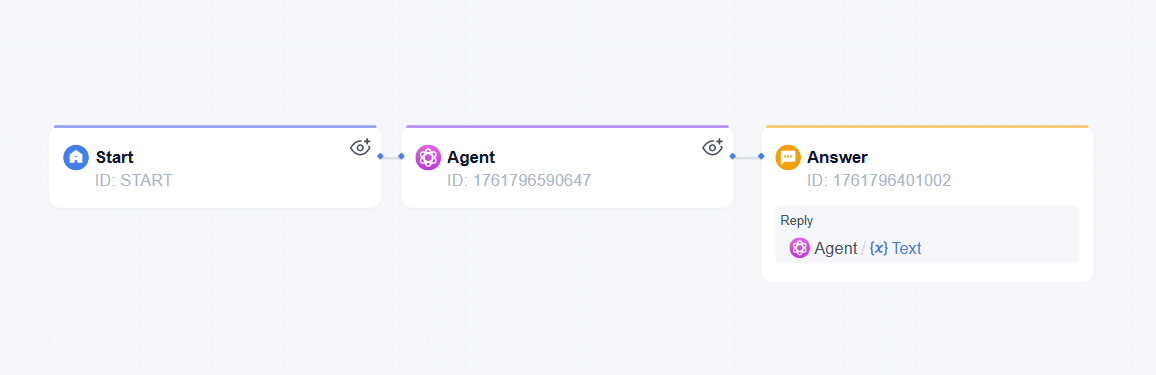
Most importantly, GoInsight is not a replacement for Odoo; it enhances it, turning raw data into instantly accessible insights.
What this enables:
- User asks questions in natural language
- GoInsight interprets the query and connects directly to the Odoo database
- Relevant data is retrieved in real time (with no caching or delays)
- The system returns a clear, actionable insight
Ready to turn CRM Sales Automation into real operational impact? See how GoInsight helps enterprises automate sales workflows at scale.
Start 30 Days TrialConclusion
Sales automation is no longer about doing more; it's about doing the right things faster and with better context. Teams that succeed aren't the ones with the most tools, but rather the ones that align automation with clean, connected systems and real buyer intent. When those pieces come together, automation stops being a process and becomes a competitive advantage.





Leave a Reply.