
- What Is Employee Onboarding Automation and Why It Matters
- 5 Ways to Automate Employee Onboarding Process
- 1. Automate Pre-boarding Tasks
- 2. Automate Account & Access Provisioning
- 3. Automate Employee Communication & FAQ Support
- 4. Automate Training & Knowledge Delivery
- 5. Automate Culture & Team Integration Moments
- Automate Employee Onboarding Workflow with GoInsight.AI
- Employee Onboarding Automation Best Practices
- Conclusion
- FAQs
You know that feeling when a new hire arrives at work on Day 1 to find no active email account, no workstation ready, and no clear guidance on the next steps. It’s a frustrating start, indeed. Traditional onboarding is slow, manual, and inconsistent across teams.
In contrast, when enterprises automate employee onboarding, it creates a smoother and more predictable experience for both HR and new talent. That’s the reason why 63% of HR departments plan to invest more in automation in 2026.
What Is Employee Onboarding Automation and Why It Matters
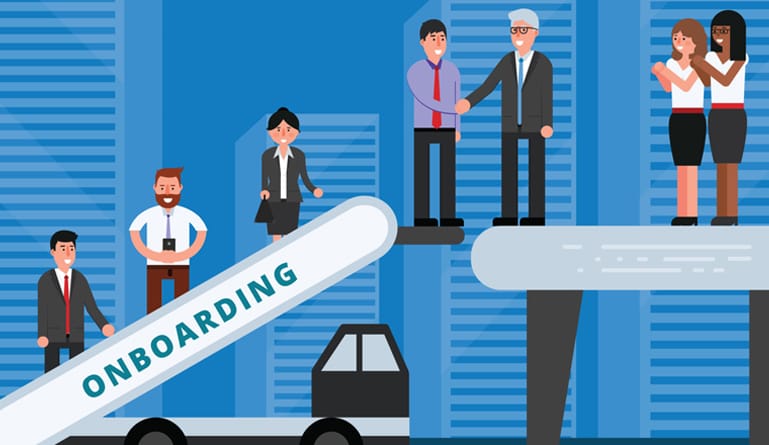
What is Onboarding Automation
Onboarding automation is the process of using technology to put employee onboarding activities on autopilot, eliminating or reducing the need for manual intervention. It involves creating digital workflows to trigger, execute, and track new-hire enablement tasks.
Manual vs. Automated Employee Onboarding
| Factor | Manual Onboarding | Automated Onboarding |
|---|---|---|
| Speed | Slow, sequential tasks | Fast, immediate triggers |
| Accuracy | High risk of human error | Consistent, precise execution |
| Scalability | Limited by HR capacity | Scales with hiring volume |
| Consistency | Varies by manager or region | Standardized, uniform across all hires |
Benefits of Onboarding Automation
The advantages of employee onboarding automation extend across the organization, for both employers and new workers.
For Employers:
- Reduces time spent on repetitive, administrative tasks like data entry and access requests.
- Structured workflows reduce errors in new personnel onboarding.
- Digital audit trails and standardized forms reduce legal and security risks.
- Enables faster time-to-productivity for new employees.
- Automated workflows can handle one hire or one hundred without additional strain.
- Better reporting on onboarding metrics and compliance.
For Employees:
- Eliminates confusion about next steps or required actions.
- Ensures tools and access are ready on Day 1.
- Faster answers to routine questions through AI assistants.
- Conditional logic can tailor the onboarding experience based on role, department, or location.
- Creates a sense of momentum and inclusion from the beginning.
5 Ways to Automate Employee Onboarding Process
Transitioning to an autonomous onboarding system calls for careful planning. Here are five logical steps enterprises should take to implement a robust automated employee onboarding process:
1. Automate Pre-boarding Tasks
Pre-onboarding preparations typically involve multiple repetitive steps, such as sharing forms, collecting documents, and coordinating efforts across departments. These tasks may seem minor individually, but together they frequently slow down the onboarding timeline.
By shifting these actions into intelligent workflows using automation platforms like GoInsight.AI, companies can ensure electronic forms are sent immediately upon offer acceptance, collect e-signatures on schedule, and automatically log confirmations without manual follow-ups. The same flow can also deliver welcome materials, share first-week schedules, and remind new hires to complete required tasks before Day 1.
This creates a smoother, more predictable pre-boarding experience with fewer last-minute issues.
Ready to cut down manual pre-boarding work?
See how GoInsight.AI enables teams to build automated workflows without needing complex technical skills.
2. Automate Account & Access Provisioning
Manual account provisioning often slows down new hires, leaving them unable to access key tools like email, Slack, or CRM systems on Day 1. Automated workflows solve this by creating accounts and assigning role-based access instantly, keeping HR and IT in sync. Key benefits include:
- Faster ramp-up: Employees can start using all required systems immediately.
- Reduced errors: Predefined rules ensure consistent permissions and prevent forgotten accounts.
- Improved visibility: Each account creation and access change is logged automatically, giving organizations a clearer overview of who has access to what.
This approach ensures smoother onboarding, fewer delays, and more predictable access management.
3. Automate Employee Communication & FAQ Support
New hires always have many questions, such as: “Who’s my manager?” “Where do I get my badge?” “What’s our PTO policy?"
Enterprises can connect internal knowledge bases with an AI ChatBot so that whenever a new hire has a question about policies, schedules, or workplace logistics, the bot provides an immediate, accurate answer. Routine queries are handled automatically, reminders and updates are delivered without human intervention, and only complex or exceptional cases are escalated to HR.
This approach ensures that information is always consistent and up to date, while freeing HR teams to focus on personal interactions that truly matter.
4. Automate Training & Knowledge Delivery
Many companies struggle with training that feels generic, poorly timed, or difficult to track. New hires often don’t know what to learn first, while HR and managers can’t easily monitor progress.
Automation fixes this by delivering the right learning modules at the right moment—based on role, team, or completion of previous content. Progress is tracked automatically, deadlines stay visible, and managers receive alerts only when someone needs support. This creates a structured, guided learning path without requiring manual coordination.
As a result, new hires ramp up faster with clearer guidance, and HR gains a reliable view of training effectiveness.
5. Automate Culture & Team Integration Moments
In many organizations, cultural continuity and team cohesion are often overlooked. New hires often finish their first week without a proper introduction to team norms, company values, or meaningful connection with colleagues.
Automation helps organizations intentionally design these moments:
- A welcome message can be triggered in Slack on Day 1
- A peer buddy or mentor can be assigned based on shared interests
- Short culture modules or value spotlights can be delivered over the first few weeks
- Casual touchpoints like virtual coffee chats can be scheduled automatically
The result is simple: new hires feel welcomed, connected, and grounded in the culture far earlier than traditional workflows allow.
Automate Employee Onboarding Workflow with GoInsight.AI
Once companies identify which onboarding tasks to automate, the next challenge is putting everything into one cohesive workflow. GoInsight.AI provides a visual, drag-and-drop workflow builder that lets teams automate onboarding without technical complexity.
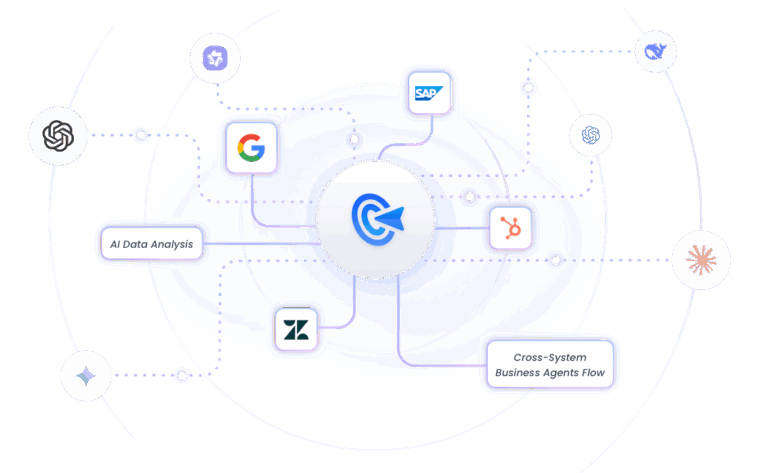
Here’s a simple walkthrough of how organizations typically build an onboarding flow in GoInsight:
- Connect your core systems
- Integrate HRIS, identity platforms, ITSM tools, and communication apps so events like “New Hire Created” or “Offer Accepted” automatically trigger the workflow. GoInsight’s prebuilt connectors reduce setup time.
- Design the onboarding journey
- Teams drag and drop actions such as sending pre-boarding forms, creating accounts, generating tickets, scheduling welcome messages, assigning a buddy, or launching training modules. Multi-step automation ensures everything runs in the right order.
- Add intelligence with the AI Bot
- If the workflow includes employee communication or FAQ support, the AI Bot can respond using company knowledge, provide onboarding guidance, and escalate to HR when needed.
- Personalize with role-based branching
- GoInsight lets companies build different paths for engineering, sales, design, or regional teams. Each path can have unique access requirements, training, or culture touchpoints.
- Keep humans in the loop
- For steps requiring review like equipment approval or access exceptions, human-in-the-loop prompts ensure the right manager confirms before automation continues.
Through this guided workflow, GoInsight.AI keeps onboarding consistent, timely, and scalable without increasing HR’s workload.
Employee Onboarding Automation Best Practices
Without a strategic approach, employee onboarding automation can simply accelerate a broken process. With that in mind, here are five best practices for successful implementation.
1. Avoid Fragmented Tech Stack
Disconnected tools lead to brittle automations, data silos, and manual handoffs. It is always best to consolidate or integrate core HRIS, IT service management, identity, and collaboration platforms before building workflows.
2. Standardize Onboarding Workflow Before Automating
It is necessary to map and optimize the human-driven process first, including exceptions. Automating a chaotic manual workflow only leads to mechanized chaos. On the other hand, standardization reduces conditional complexity later and makes automated logic easier to test and maintain.
3. Build Conditional Logic Instead of Static Workflows
Not all hires are the same, so use conditional branches (role, location, employment type) to adapt automations. This way, international hires will get localized compliance steps by default, or an engineer might automatically receive different tool access and training than a marketing manager.
4. Integrate HRIS + IT + Knowledge Base
The most powerful systems connect the core HRIS with IT provisioning tools and the company knowledge base. Good integration is vital for creating a truly seamless experience from offer to productivity.
5. Measure Onboarding Time-to-Productivity
Sure, cost per hire and satisfaction rates are crucial, but what’s more important is how quickly someone contributes in meaningful ways. As such, it makes sense to track milestones, such as first task completed, first meeting led, and first project delivered.
Conclusion
The manual approach to onboarding is slow, inconsistent, and prone to missed steps. Moving to automated employee onboarding marks a fundamental shift in how organizations integrate new talent—and it delivers clear operational gains. For HR teams, automation cuts repetitive tasks, strengthens security, and frees time for higher-value work. For new hires, it provides clarity, quick access to tools, and a structured start. Begin small, automate the simplest steps first, and gradually standardize the entire onboarding flow.
FAQs



Leave a Reply.