
- What to Trust: Letting AI Handle the Heavy Lifting
- 1. Analyze & Hypothesize
- 2. Data-Driven Layout Suggestions
- 3. Dynamic Text Replacement
- 4. Rapid A/B Testing
- What to Worry About: The Rules of Human Oversight
- 1. Core Messaging
- 2. Traffic Volume
- 3. Page Speed
- 4. Brand Consistency
- What to Look For: Criteria for Evaluating AI Tools
- 1. Actionable Insights
- 2. Integration and Technical Compatibility
- 3. Data Security and Privacy
- Building Your Own Personalized Landing Page Optimization Workflow
You've got traffic coming in, ads are running, SEO is doing its job, and impressions look healthy. But your conversion rate is stuck.
A major reason is that landing pages aren't relevant to specific queries. Users with completely different intents are being sent to the same generic page, forcing them to "figure it out," and then they leave without buying.
This problem can be effectively solved with AI-driven landing page optimization. According to recent studies by SuperAGI, AI-powered landing page builders improved conversion rates by up to 25%.
But AI isn't a cure-all. When teams blur the line between automation and strategy during optimization, performance breaks down. For consistent gains, they need to know what AI handles well and what needs human judgment.
What to Trust: Letting AI Handle the Heavy Lifting
AI works best with structured, data-heavy tasks that typically take hours or weeks to do manually. These can be confidently handed over to AI workflows to save time and increase relevance.
1. Analyze & Hypothesize
Before AI
Teams manually review analytics dashboards, interpret trends, and form hypotheses based on limited data samples. The process is slow and often biased, leading to missed behavioral patterns across large datasets.
What AI Does Better
AI can process thousands of sessions simultaneously, identifying patterns such as scroll depth, click behavior, and user flow.
It can also build user profiles to highlight what works, who the page resonates with, and potential friction points, helping teams move from observation to hypothesis faster.
The Benefits & Business Impact
Instead of guessing what's wrong, businesses can prioritize changes based on real behavioral data.
Onward Agency, working with Deep Forestry, faced a conversion issue despite attracting the right audience. Using Microsoft Clarity, they analyzed heatmaps and session recordings to track user behavior around key CTAs.
They discovered that having three separate CTAs caused hesitation and drop-offs. After consolidating and refining the CTA structure, Deep Forestry saw over 40 new consultation bookings and reduced dead clicks from 9.5% to 0.5%.
2. Data-Driven Layout Suggestions
Before AI
Decisions on landing page design are typically based on standardized best practices or stakeholder opinions. However, what looks visually appealing doesn't always align with user behavior, leading to layouts that hinder conversions.
What AI Does Better
AI leverages interaction data, such as attention heatmaps, to recommend layout changes based on real user focus. These tools identify which elements users notice first.
The Benefits & Business Impact
Design becomes performance-driven rather than subjective, improving engagement and conversion flow.
The Skin Deep, known for its THE AND interactive documentary and card games, initially relied on its Emmy-winning success to drive sales.
After an attention-based audit revealed that their landing page wasn't built for cold traffic.
Users struggled to understand the product, while attention was focused on packaging and promotional text instead of the value proposition. The CTA also received minimal attention due to poor placement.
Using these insights, they repositioned messaging, introduced product-in-use visuals, and aligned the CTA with natural attention flow.
These changes led to a 93% increase in conversions, highlighting how data-driven layout optimization improves performance.
3. Dynamic Text Replacement
Before AI
Static landing pages deliver the same message to every visitor, regardless of user segment. This creates a disconnect between user intent and page content, reducing the likelihood of conversion.
What AI Does Better
AI can dynamically adjust headlines and messaging based on user attributes such as traffic source, keyword intent, or audience segment.
The Benefits & Business Impact
More relevant messaging leads to higher engagement and improved conversion rates.
Mutiny's growth team faced a scalability issue. Creating personalized content for each account was time-intensive, limiting how many customers they could engage.
Using AI-driven personalization, they automated data extraction from sources like Gong and generated tailored landing pages for each account. These pages adapt messaging and content based on individual customer context.
As a result, content creation time dropped from 4 hours to 15 minutes per account, while personalized experiences drove a 50% conversion rate for meeting bookings.
4. Rapid A/B Testing
Before AI
A/B testing is often sequential, slow, and limited in scope. It takes too long to reach meaningful conclusions, delaying optimization cycles.
What AI Does Better
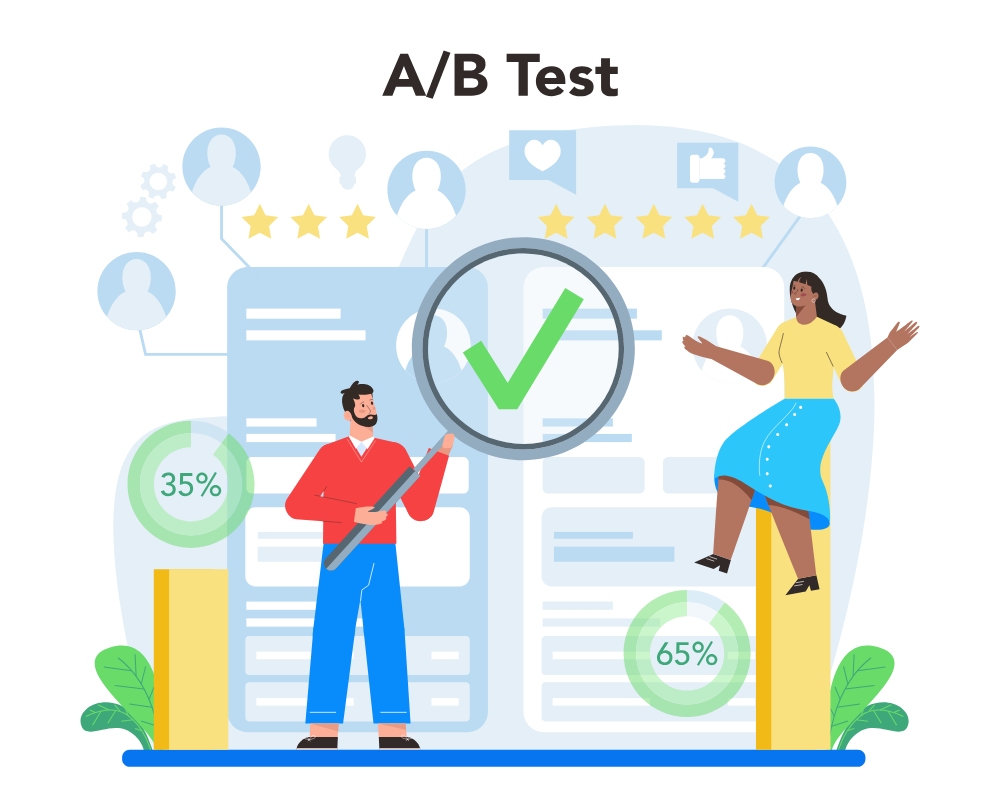
AI can test multiple variations at once, automatically directing traffic toward better-performing versions and identifying what works faster.
The Benefits & Business Impact
Continuous, evolving optimization rather than periodic, time-consuming experimentation.
Epson used AI-driven testing to optimize its website for lead generation, experimenting with different combinations of headlines, images, and CTAs.
As a result, Epson noticed a 20% increase in lead generation and a 10% improvement in conversions. More importantly, AI reduced testing time, allowing the team to cut down what would traditionally take a year into weeks.
What to Worry About: The Rules of Human Oversight
While AI can optimize mechanics, it cannot define strategy. Handing over full control introduces risks and can jeopardize performance and brand integrity:
1. Core Messaging
Before AI
Humans can contextualize copy, define positioning, and ensure clarity. Messaging is built around audience understanding, brand positioning, and product value.
If AI Takes Over
AI optimizes content for engagement metrics, such as clicks or time on page.
Risks/Limitations
AI-generated copy often lacks depth and brand alignment. It can sound generic or misaligned with the actual offering.
Studies show AI copy can sound generic and miss brand context, weakening trust.
While businesses may see short-term gains in efficiency and engagement, long-term trust and conversion quality may decline.
2. Traffic Volume
Before AI
Marketers ensure there is sufficient traffic volume before testing and iterating. Human teams need to determine whether the data is sufficient before acting on AI recommendations.
If AI Takes Over
AI attempts optimization regardless of sample size.
Risks/Limitations
Low traffic leads to unreliable data and false positives. Traditional A/B testing requires high-volume traffic (over 100,000 views) to work effectively in a reasonable time frame.
Decisions based on weak data can lead to misleading optimizations that hurt performance at scale.
3. Page Speed
Before AI
Teams prioritize load times and technical efficiency. Businesses still need to balance personalization with performance to ensure a satisfactory landing page flow and user experience.
If AI Takes Over
AI tools may introduce scripts, dynamic elements, or unwanted personalization layers.
Risks/Limitations
This can lead to code bloat and slower load times, hurting UX and SEO.
According to a Harness survey, 67% of developers spend more time debugging AI-generated code, with growing concerns that code bloat requires a specific methodology to avoid degrading technical SEO.
Higher bounce rates, lower ranking, sluggish page performance, and reduced conversions.
4. Brand Consistency
Before AI
Teams maintain brand voice and visual identity across channels. Consistency builds trust; AI cannot enforce it without clear rules.
If AI Takes Over
AI may generate variations that drift from established guidelines.
Risks/Limitations
Inconsistent tone, fragmented messaging, and a disjointed user experience. As mentioned by Nadia Fernandez, founder of La Isla Designs, many forget the "brand vibe" when using AI, causing brand drift and inconsistent strategy. This not only reduces user trust but also weakens brand influence.
What to Look For: Criteria for Evaluating AI Tools
AI-powered landing page optimization is becoming a standard, but finding the right tool can be difficult. Here are a few criteria to consider:
1. Actionable Insights
- Predictive & Behavioral Analysis: Look for tools that can analyze sessions, heatmaps, and user flows to identity page pain points.
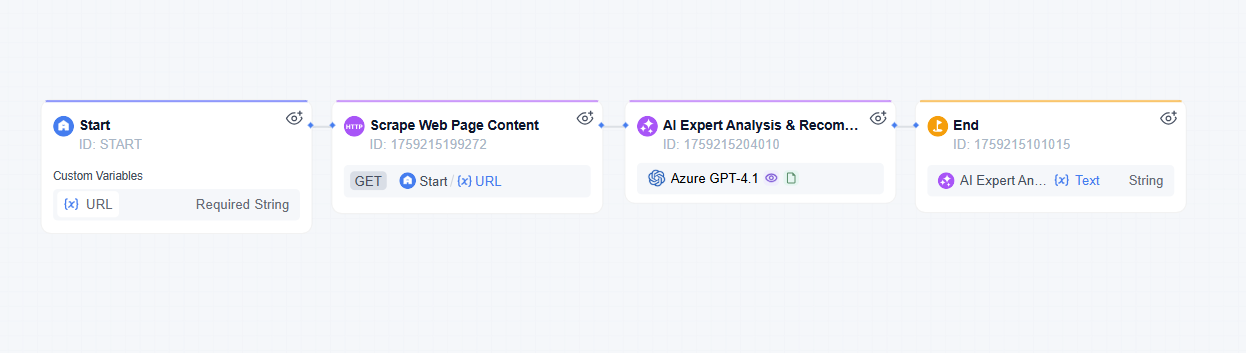
- Actionable Recommendations: AI-generated insights should translate into clear next steps. Tools like GoInsight.AI's Landing Page Optimization Analyzer generate structured reports with strengths, weaknesses, and suggested improvements after analyzing a page.
- Brand Archetype and Voice Alignment: Ensure that the AI adapts to brand guidelines, not overwrite them.
- Competitive Intelligence: Built-in competitor comparisons of how their pages are structured allow businesses to adapt optimization decisions.
2. Integration and Technical Compatibility
- Tech Stack Integration: Compatibility with existing tech stack including CRMs, CMS, and analytics tools is essential.
- Mobile Responsiveness: Optimization should account for both desktop and mobile user experiences.
- Speed Optimization: The tool should not compromise on performance; ensure to run tests to ensure landing page speed.
- Automated Implementation: Changes should be easy to deploy without adding unnecessary complexity.
3. Data Security and Privacy
- Compliance & Data Handling Practices: Ensure the tool follows proper data protection standards and clearly defines how user data is stored and used.
Building Your Own Personalized Landing Page Optimization Workflow
Tired of bouncing between tools just to track a single landing page? One minute you're in GA4 or GSC, checking traffic sources and bounce rates. Next, it's Clarity or Hotjar for heatmaps and scroll depth. Then PostHog or Mixpanel for events. And maybe a few other landing page optimization platforms — constantly switching tabs, trying to get a clear read on performance.
Before AI, that was just reality for most marketers.
But today? You can build AI-driven workflows or agents with little to no code. So have you thought about pulling all those steps into one window? Building an AI-powered landing page optimization agent built specifically for your team?
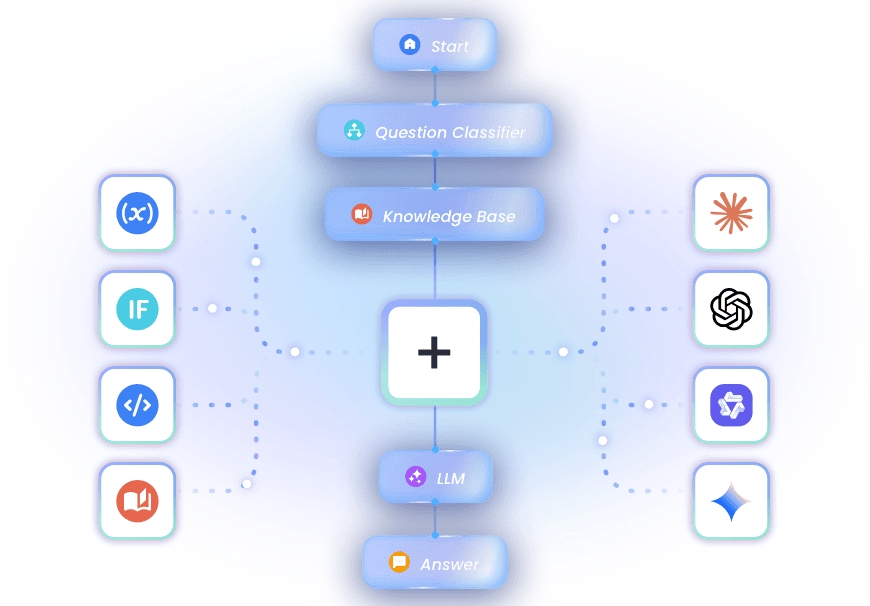
GoInsight.AI makes that possible. It lets you connect different nodes into a complete workflow. All inside a visual interface. That workflow can plug into APIs, bring in LLMs, assign them specific roles, and tell them exactly what to do. Like:
- Analyze landing page performance data
- Review content quality
- Generate actionable optimization recommendations
Ready to make your landing page more relevant, faster, and less painful?
See how GoInsight.AI helps build your own AI optimization agent in minutes, not months.
Conclusion
While AI can boost conversions on a landing page, it can't replace strategy. It works best when handling execution, while humans guide messaging and direction. The most effective approach is not full automation, rather control.
Knowing what to trust and what to oversee is what turns AI from a tool, into a real conversion driver.





Leave a Reply.