
Imagine being a recruiting manager facing 500+ applications for a single role. Each resume looks similar at first glance, but in that pile hides the ideal candidates who could transform your team's performance.
Want to get rid of this administrative bottleneck?
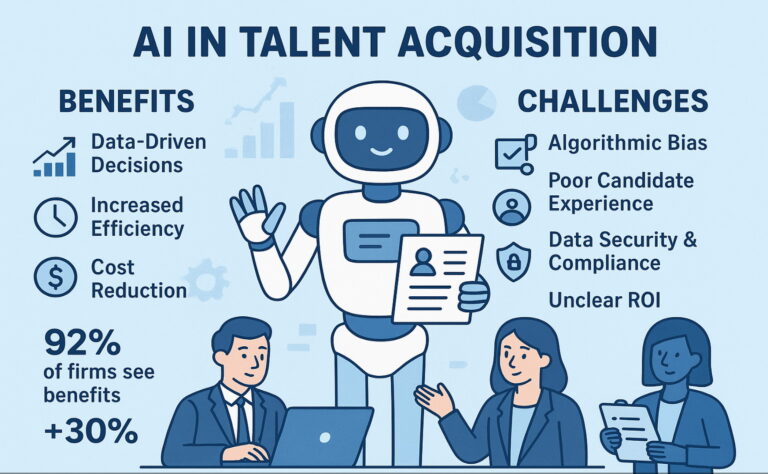
Enter AI in HR recruitment, a technology that is revolutionizing how organizations attract, evaluate, and engage talent via smarter and data-driven decisions. This isn't a distant future concept; it's a present-day reality as 38% of HR leaders are already piloting or implementing Generative AI, a number that has doubled in less than a year. So, the question is no longer if AI will change recruitment, but how you will leverage it to stay competitive. However, AI-driven recruitment comes with challenges like algorithmic bias and data security risks, poor candidate experience, and unclear ROI. Addressing these challenges is crucial to the successful integration of AI in talent requisition for your company.
AI solutions like GoInsight.AI, through private knowledge bases, multi-agent collaboration, automated workflows, and human-AI synergy, help companies address complex challenges in the recruitment process, improving efficiency, fairness, and compliance, ultimately enhancing recruitment quality and corporate competitiveness.
Benefits and Business Impact of AI in Talent Acquisition
AI is transforming how companies find and hire talent. For businesses, it means data-driven decisions, enhanced efficiency, reduced cost, and a stronger workforce alignment with business goals.
1. Data-Driven Decisions to Forecast the Best Candidates
Unlike traditional recruitment that often relies on intuition, AI-based recruiting focuses on making decisions backed by real-time data from multiple sources.
Through predictive analytics, AI systems analyze candidate profiles, skills, past experiences, and even behavioral indicators to forecast job success and cultural fit. The result is a stronger, more aligned workforce.
2. Increased Efficiency by Automating Hiring Tasks
Using AI for recruitment simplifies hiring by automating repetitive tasks like resume screening, interview scheduling, and initial candidate communication via chatbots. A report shows that AI recruitment can reduce time-to-hire by 40-50% while significantly improving the candidate quality.
This allows HR professionals to focus on strategic activities such as employer branding, candidate engagement, and building long-term talent pipelines.
3. Cost Reduction by Cutting Down HR's Repetitive Work
From advertising jobs to handling administrative work, hiring can be expensive. AI helps reduce these costs by cutting repetitive HR workloads by up to 60%, which translates to around 25% lower labor costs. In the long run, this contributes to a more sustainable and scalable hiring process.
4. Strategic Business Growth
When hiring becomes faster, smarter, and more consistent, the overall business benefits. Companies gain a competitive edge with top talent that drives innovation, productivity, and long-term success.
Critical Challenges of AI in Talent Acquisition
Despite its promising benefits, the adoption of AI in HR recruitment comes with critical challenges. Addressing them is crucial for effective AI talent acquisition implementation:
1. Algorithmic Bias: The Perpetuation of Prejudice
AI systems are only as good as the data they're trained on. When historical hiring data contains hidden biases such as gender, age, or background preferences, the AI often inadvertently replicates them in screening and ranking candidates.
This leads to unfair outcomes and damages an organization's diversity and inclusion goals. For example, if a company has historically hired more men for engineering roles, the AI may learn to unfairly deprioritize female candidates.
2. Poor Candidate Experience: The Trust Deficit
An over-automated process can make candidates feel alienated and devalued. A Gartner survey reveals only 26% of candidates trust AI to evaluate them fairly, highlighting a major trust deficit in AI-driven recruitment.
If not managed carefully, this can harm an employer's reputation and deter top talent, who may disengage from a process they perceive as unfair.
3. Data Security & Compliance: Protecting Data
Using AI for recruitment involves processing a vast amount of highly sensitive personal data, including resumes, contact details, salary history, and even interview videos. This makes the recruitment platform vulnerable to breaches, unauthorized access, and cyberattacks, if not properly secured.
A single data breach or compliance misstep can result in massive fines and irrevocable damage to the company's reputation.
4. Unclear ROI: The Justification Dilemma
Many HR teams struggle to measure the real impact of AI-based recruiting. Despite promising statistics, the initial costs for software, integration, and training can be high.
Without defined KPIs, like improved quality of hire or reduced turnover, HR leaders may struggle to justify continued investment.
GoInsight.AI: Your Enterprise-Grade Platform for Building AI Recruitment Agents
When adopting AI for talent requisition, companies experience the issue of a fragmented tech stack. Mostly, it's a chatbot here, a screening platform there, and disconnected systems in between.
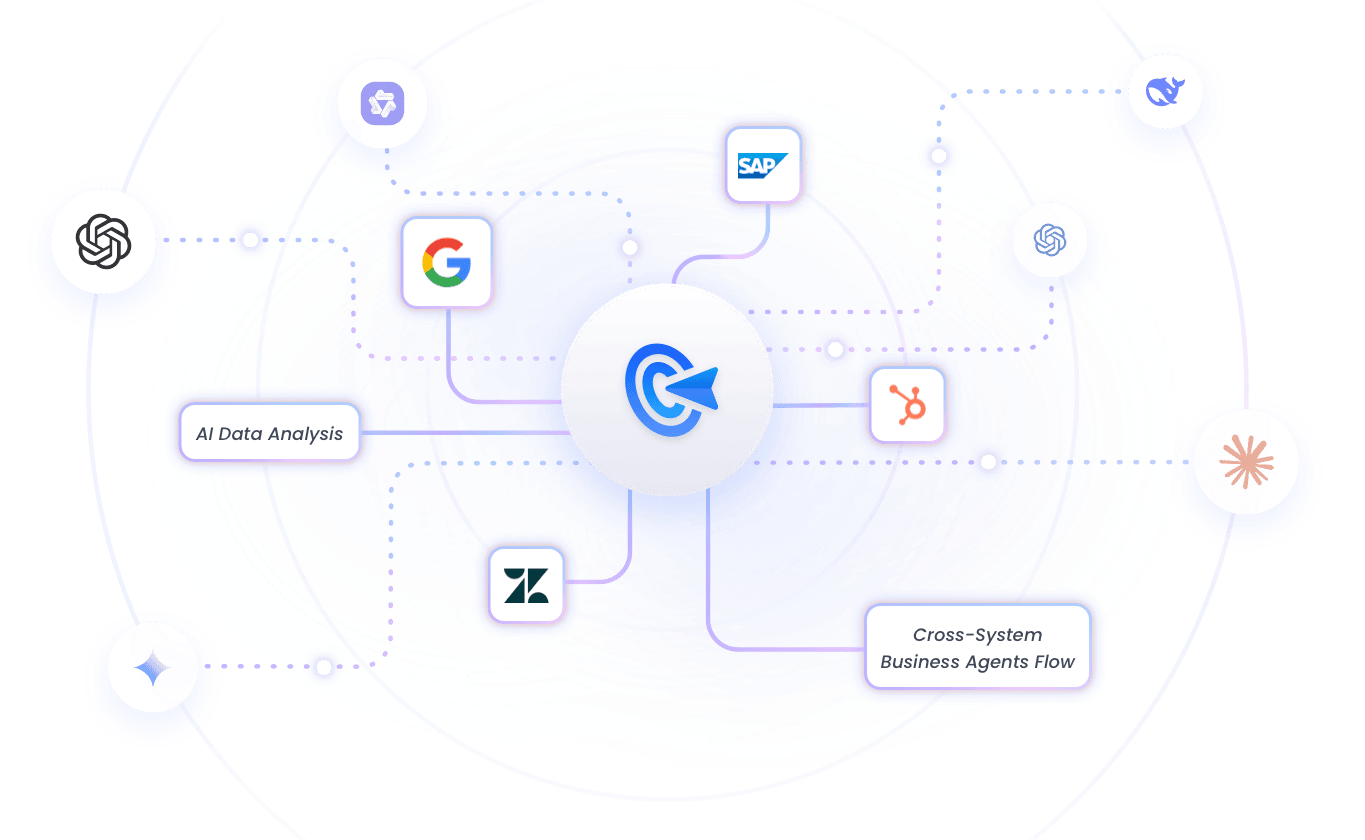
Enter GoInsight.AI. This enterprise-grade AI automation platform unifies all HR AI recruitment functions into a single, intelligent workflow. It is designed to help organizations build, deploy, and scale AI recruitment agents that transform HR into a proactive, data-driven function.
GoInsight.AI addresses key challenges in AI-driven HR recruitment as follows:
- Mitigating Unconscious Bias: GoInsight.AI allowing enterprise to use their own private knowledge bases in AI processes.This means they don't have to rely on general data that might have built-in biases, leading to fairer decisions and ensuring all qualified candidates are considered.
- Balancing Automation with Human Oversight: The platform supports multi-agent collaboration with human-in-the-loop nodes, allowing human reviewers to intervene at critical decision points. This preserves the human touch in recruitment, enhances the candidate experience.
- Ensuring Data Security and Governance: Operating within a private, enterprise-controlled environment, GoInsight.AI prevents sensitive recruitment data from being exposed to public models. With strict access controls, approval processes, and audit logs, the platform ensures data privacy and compliance.
Key Features of GoInsight.AI
This powerful AI software comes with impeccable features that automatically overcome the challenges HR teams face while employing AI-driven talent acquisition.
- Visual Workflow Editor (No-Code Setup) The platform boasts a no-code, drag-and-drop interface to let managers design and automate recruitment workflows effortlessly.
- Collaborative Intelligence Workspace (Human + AI Collaboration) This is the core of human-AI partnerships. Its human-in-the-loop workflow feature allows HR teams to work side-by-side with AI agents in a shared workspace.
- Multi-Agent Collaboration GoInsight.AI can deploy specialized AI agents for different hiring stages, like screening, scheduling, and engagement, that collaborate seamlessly for maximum efficiency.
- Integration with Tools & Systems It connects seamlessly with your existing HRIS, ATS, and communication tools.
Top Use Cases of AI in Talent Acquisition
As organizations race to hire the right talent faster, AI in HR recruitment has become the ultimate solution for addressing the real-world hiring challenges. Some of the top examples of AI in talent requisition in practice today include:
1. Job Posting
-
Challenge: Ensuring job descriptions are accurate, unbiased, and compliant, while quickly reaching target candidates.
-
Solution: GoInsight.AI can automatically generate and optimize job descriptions using customized knowledge bases and multi-agent collaboration, ensuring compliance and appeal. They also support multi-channel posting to enhance reach.
-
Impact: Improves efficiency and quality of job postings, reduces manual effort and biases, and enhances the company's image and recruitment outcomes.
2. Resume Screening
-
Challenge: Traditional AI may carry implicit biases from training data, leading to unfair screening, and may struggle to incorporate company-specific rules and context.
-
Solution: By integrating private knowledge bases with company-specific rules and employing multi-agent collaboration with human review points, GoInsight.AI ensures a fair, transparent screening process aligned with company needs.
-
Impact: Enhances screening accuracy and fairness, reduces compliance risks, improves candidate experience, and saves human resources costs.
3. Interview Scheduling
-
Challenge: Coordinating interview times among multiple parties is complex and prone to errors, affecting candidate experience.
-
Solution: GoInsight.AI can automatically coordinate schedules, execute tasks through automated workflows, and support manual approval to ensure accurate arrangements.
-
Impact: Reduces scheduling errors and manual workload, enhances candidate satisfaction, and accelerates the hiring process.
4. Candidate Communication
-
Challenge: Providing timely, personalized responses to numerous candidates while maintaining good interaction and data security.
-
Solution: Multi-agent collaboration enables 24/7 automated responses and personalized communication, with private deployment ensuring data security and support for human intervention in complex issues.
-
Impact: Enhances candidate interaction experience, improves communication efficiency, ensures data security, and strengthens the employer brand.
How to Get Started with GoInsight.AI: Best Practices and Implementation
Here's the step-by-step guide to building and deploying your custom AI agents for talent recruitment:
Step 1: Define Your Goals
First things first, identify the recruitment challenges you want to solve. It can be time-to-hire reduction, candidate experience improvement, or bias mitigation.
Step 2: Build Your Knowledge Base
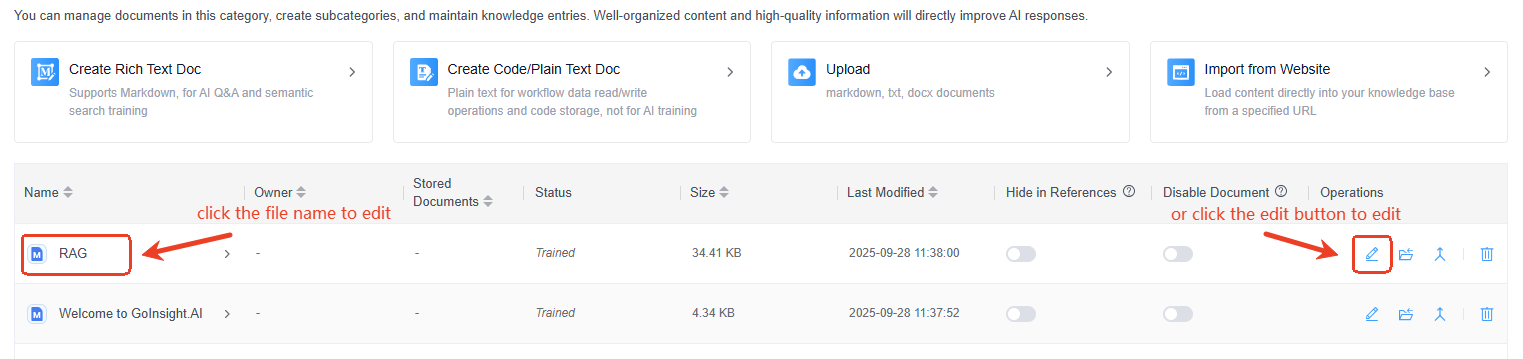
Upload and organize your HR materials so GoInsight.AI can learn from your company's policies, tone, and role requirements. A richer and more diverse knowledge base will improve the accuracy and consistency of the AI recruitment agent.
Step 3: Configure Your Workflows
Use the visual editor to automate repetitive tasks and set human approval checkpoints where oversight is needed. This step is needed to bring human judgment into the loop.
Step 4: Train Your Team
It is probably the most critical step. Be sure to train your HR team to effectively collaborate with the AI, not just use it. Provide hands-on training to help them leverage AI insights in decision-making.
Step 5: Monitor & Refine
Continuously track performance against your KPIs and refine workflows and agent behavior. This ensures ongoing optimization and maximizes your long-term ROI.
FAQs about AI Agents for HR
Q: Will AI in HR recruitment replace human recruiters?
No. AI only augments, not replaces, human recruiters. AI recruitment agents handle repetitive tasks like screening and scheduling, while humans focus on strategy, relationship-building, and final decision-making.
Q: How does AI influence diversity in hiring?
It's a double-edged sword. Poorly designed AI can amplify historical bias. However, when designed properly, it increases diversity by focusing purely on skills, using inclusive language, and removing subjective bias from initial screening.
Q: What are the key advantages of automated screening?
AI in talent acquisition guarantees unmatched speed, high scalability, and consistency. It processes thousands of applications quickly and applies the same criteria to every candidate, reducing initial screening time from days to minutes.
Q: How can HR teams adapt to these changes?
HR professionals should embrace AI literacy, learning how to interpret AI recommendations and oversee automated processes ethically.
Q: What ethical considerations should be addressed in AI recruitment?
The main ethical priorities include transparency, fairness, data privacy, and accountability. The HR managers must ensure fair and audited models, secure sensitive candidate information, and be clear with candidates about how AI is used in the process.





Leave a Reply.