

- How AI is Applied in Manufacturing Currently
- Predictive Maintenance
- Generative Design & Digital Twins
- Optimizing Factory Planning and Layout
- Why AI Prediction Acts Slowly When Executed in Reality
- AI Value Is Locked in Data Silos
- Manual Integration Causes Execution Lag
- Two-Real World Solutions (Case Studies)
- From Closed-Loop Success to Enterprise Convenience
AI in manufacturing is reshaping the process, but not in the way previously predicted. Instead of fully replacing workers or taking over production floors, AI now functions as an enhancement tool, streamlining how teams design, plan, and operate.
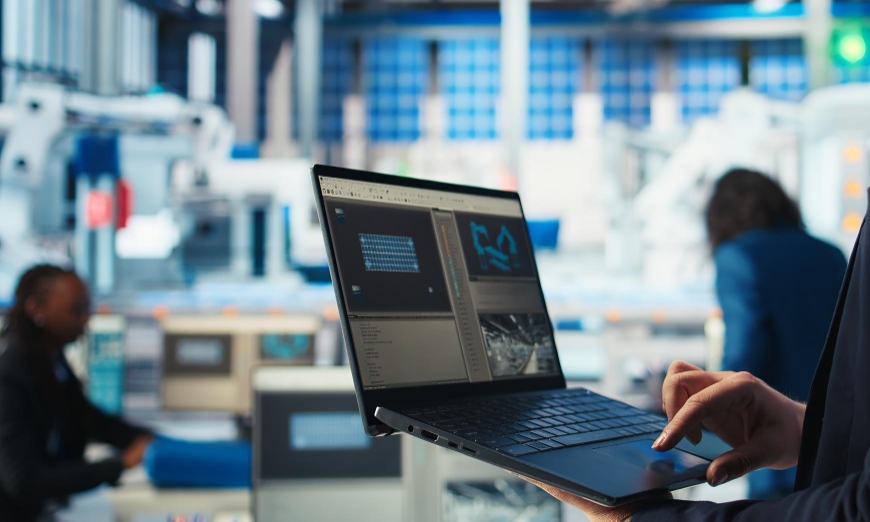
Modern factories already use AI to spot risks early, optimize decisions, and improve quality before small issues become costly problems. The result is faster, smarter product cycles where humans and machines work better together.
This article explores what AI can do in manufacturing and how its impact can grow.
How AI is Applied in Manufacturing Currently
In manufacturing, AI is often portrayed as a technology built to "take over" human workers. But in reality, the changes happening in the industry are quite the opposite.
The real strength of AI is its ability to augment existing processes. This helps engineers move & work faster, improves operational accuracy, and gives manufacturers new ways to prevent downtime or waste.
Autodesk's take on the subject clearly illustrates this shift: AI isn't a replacement for engineering expertise, it's a tool to magnify it. Here are three core use cases that are currently shaping modern factories:
1. Predictive Maintenance
Traditionally, maintenance is either reactive (risking unexpected failure) or scheduled (risking wasted resources on premature service).

Predictive maintenance serves as an in-between solution.
With AI, models analyze machine signals (temperature, vibration, cycle counts, pressure data, etc.) to "predict" and determine when a component will fail. This way, teams get precise alerts that tell them:
- A specific machine's remaining useful life.
- The most probable part that's degrading
- What error/failure is expected
- The optimal time to intervene
This augments technicians, guiding them on where and when to look, reducing workload and eliminating unplanned downtime.
2. Generative Design & Digital Twins
Engineers typically follow a set design process based on rules, experience, and product iterations.
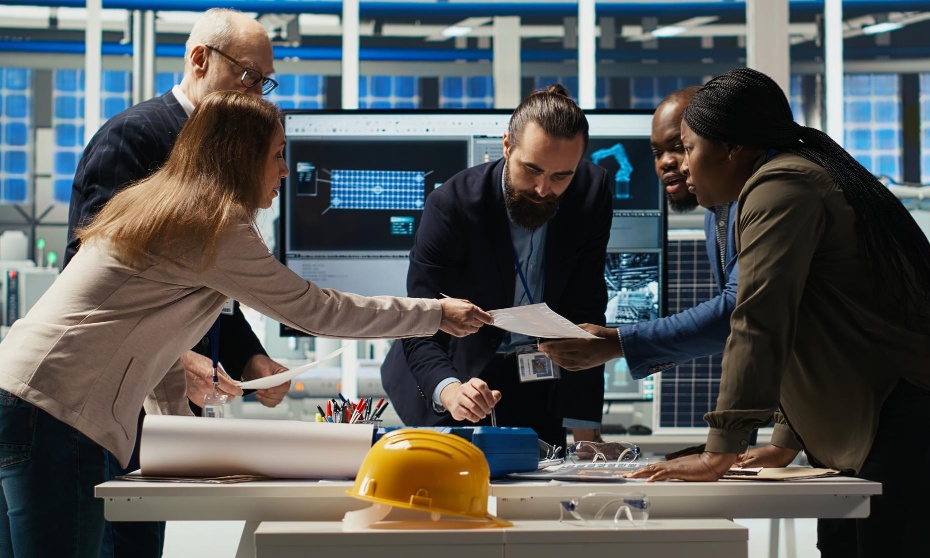
AI-driven generative design substantially accelerates this. Instead of starting from scratch, engineers define set constraints like weight, cost, material properties, manufacturing method, etc. The AI then generates hundreds of viable, optimized options.
When paired with digital twins, manufacturers gain a virtual model of the product and process. Then, the AI can:
- Simulate stress, fatigue, and lifecycle.
- Test manufacturability.
- Predict & simulate quality issues.
- Detect workflow inefficiencies before physical production.
It provides engineers with a way to "manufacture" a tool, part, or product as a digital twin and to see how it behaves in real-world applications.
The key is that AI doesn't replace the engineer in the design process; it expands & empowers their work, enabling stronger, lighter, and more cost-efficient products, faster.
3. Optimizing Factory Planning and Layout
AI also improves factory planning, a process critical to efficiency and safety. Since production must adapt to shifting demand and machine use, even small layout errors can create major bottlenecks.
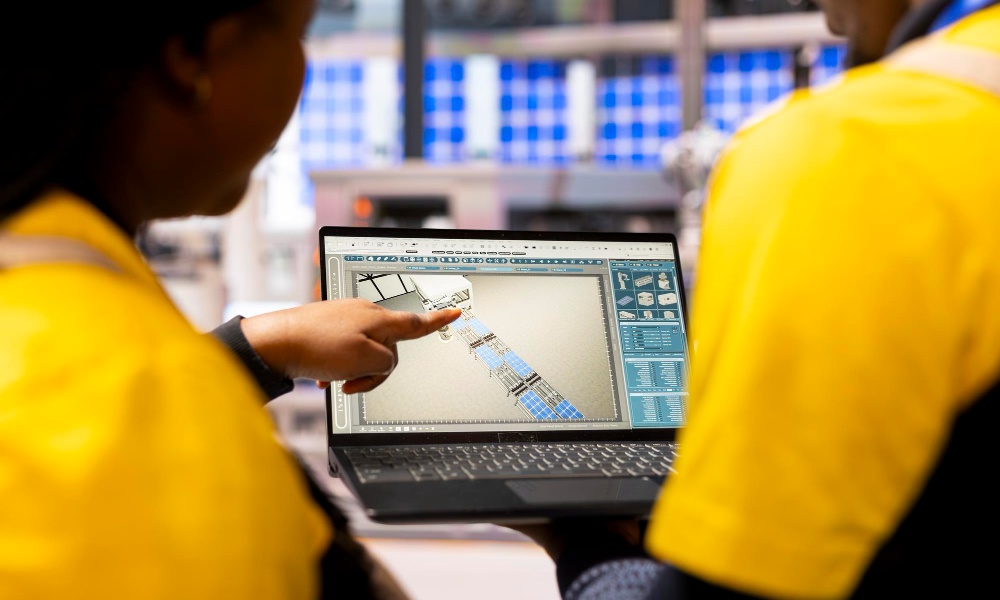
Using AI, manufacturers can generate and analyze thousands of possible scenarios, evaluating machine placement, worker movement paths, cycle times, and space usage. Utilizing these insights, manufacturers can:
- Optimize flow for new products
- Reorganize lines for faster takt times
- Maintain output & throughput even in the event of disruptions
- Respond quickly to order fluctuations
This creates a flexible factory layout that adapts when needed and evolves with the business.
Takeaways
These use cases show a clear pattern: AI doesn't replace expertise, it amplifies it. But the positive impact doesn't come without challenges.
Why AI Prediction Acts Slowly When Executed in Reality
1. AI Value Is Locked in Data Silos
In most cases, factories separate operational data (OT) and business systems (IT), so they don't integrate or 'talk to each other'. This creates silos where:
- Machine condition data remains in vibration monitoring systems.
- Work orders reside in the ERP.
- Production schedules are confined to the MES.
This creates data silos that prevent AI insights from reaching the right systems fast enough. For example:
- An AI engine detects bearing wear at 10:03 am.
- The information stagnates and doesn't flow automatically into the maintenance system.
- Technicians will not know about it unless notified manually.
- By the time they are alerted, the machine may have deteriorated further.
The insight exists, but its value is "locked" without automated data sharing.
2. Manual Integration Causes Execution Lag
Even when predictions reach the right people at the right time, manufacturers still rely on humans to interpret and act. While an AI alert can say "Machine A will fail in 5 hours," people still need to turn that into action, such as:
- Creating the maintenance task
- Adjusting schedules or plans
- Informing operators or technician teams
- Updating internal systems
- Coordinating changes across departments
These manual steps introduce significant delays, which translate directly into lost efficiency, reduced output, and higher operational costs.
Takeaways
Both problems have the same root cause; AI alone cannot solve operational challenges without connected systems. That's why leading manufacturers are shifting towards fully integrated, automated environments.
Below, we highlight two examples to show you how real companies overcame these barriers.
Two-Real World Solutions (Case Studies)
Case Study 1: System Integration & OT/IT Convergence (Solving the Data Silo Problem)
The Manufacturer, a leading publisher in the manufacturing industry, highlighted the importance of IT/OT convergence in a recent report. Here, they show how connecting factory-floor data directly into business systems can help remove operational blind spots.
The study shows real-time OT-level machine data like:
- Equipment sensor readings
- Machine status indicators
- Performance or usage trends
It’s directly integrated into platforms like MES or ERP.
While the case focuses specifically on data integration, the same infrastructure enables AI-generated insights to move seamlessly across operational systems, on both IT & OT. When an AI model produces a machine health score or detects abnormal patterns, this information follows the same pathway to appear directly inside planning & scheduling systems.
Once OT & IT are aligned, manufacturers can then:
- Surface real-time machine conditions in MES/ERP
- Update schedules or workloads automatically
- Coordinate maintenance faster, more efficiently
- Support closed-loop quality and faster decisions
This case demonstrates how integrated data environments make it possible for AI outputs to influence operations without manual intervention.
Case Study 2: Zero-Touch Response (Eliminating the Execution Lag Problem)
A second study from OXMaint shows how a tier-1 automotive supplier, MidWest Automotive Components (MAC), utilized predictive maintenance analytics to automate responses to equipment failures.
Instead of relying on traditional reactive measures or routine time-based inspections, MAC deployed AI models to continuously analyze real-time sensor data across machining and assembly lines.
The system generated equipment health scores, identified abnormal patterns, and predicted failure days or weeks in advance.
The key here is that these AI insights weren't limited to a dashboard; instead, when the model detected an issue, the platform triggered a chain of automated actions, including automated work order generation:
- Generating a maintenance work order
- Scheduling the repair during planned downtime
- Notifying technicians with a mobile maintenance app
- Updating MES and ERP so production schedules stayed aligned
- Escalating alerts for issues affecting critical automotive orders
By removing the manual steps to interpret and coordinate action, MAC achieved near "zero-touch" responsiveness. As a result, maintenance activities became proactive and synchronized, helping MAC reduce unplanned downtime by 92% and achieve an 87% uptime improvement.
This case demonstrates the value of AI-driven alerts that can launch automated workflows across systems, effectively eliminating execution delays and keeping production stable.
From Closed-Loop Success to Enterprise Convenience
Once data silos and manual processes are resolved, the next goal is enterprise-wide convenience: a system where information, workflows, and AI tools operate in a single, unified environment.
GoInsight.AI brings these capabilities together with three core components:
| Component | Core Function | Key Value | Real-World Example |
|---|---|---|---|
| Knowledge Base | Serves as a centralized, single source of truth for all organizational knowledge. | Improves data quality, reduces errors & misunderstandings, and ensures company-wide alignment. | A new purchaser instantly gets the correct SOP by asking in natural language, avoiding outdated documents. |
| Workflow | Automates the order-plan-produce cycle with AI-driven, cross-system processes. | Turns time-consuming manual hand-offs into automated flows, slashing response times. | An incoming sales order automatically triggers data cleaning, API calls, and production plan updates. |
| GoInsight Workspace | Provides a natural language interface to interact with the system and trigger actions. | Makes AI accessible to every user, closing the loop from question to outcome in one place. | An employee @mentions a workflow in chat; the system executes all steps and returns the final result. |
Conclusion
AI in manufacturing isn't about replacing people, but elevating how factories operate. From predictive maintenance to generative design and automated workflows, AI empowers human decision-making, reduces downtime, and simplifies complexity.
But to scale these benefits across the company, systems must be connected. Data silos and manual work slow everything down. Integrated environments like GoInsight.AI solve this by uniting knowledge, workflows, and AI into one system that turns insight into action, instantly.





Leave a Reply.