
- The Evolution of Employee Onboarding: From Manual to Intelligent
- Key AI Employee Onboarding Use Cases
- 1. Personalized Onboarding Experiences
- 2. Automated Paperwork and System Setup
- 3. Chatbots for Real-Time Assistance
- 4. Data-Driven Check-Ins and Feedback
- 5. Continuous Learning & Growth Pathways
- GoInsight in Action: Powering AI-Driven Employee Onboarding
- Conclusion
- FAQs
Picture This
It’s a new hire’s first day. The laptop isn’t ready, logins fail, and the welcome email shows up hours late. HR scrambles through spreadsheets, managers wait on updates, and excitement quickly turns into confusion. Statistics show that 32% of employees are unsatisfied with their onboarding, calling it reactive or disorganized. For many companies, onboarding still feels less like a journey—and more like organized chaos.
As hybrid work expands, traditional onboarding can’t keep up. That’s where AI employee onboarding steps in — transforming scattered workflows into intelligent, personalized experiences that make every first day smoother, faster, and more human. The result? A smoother start that drives retention, as employees who go through a positive onboarding experience are 69% more likely to stay for at least three years.
The Evolution of Employee Onboarding: From Manual to Intelligent
For decades, employee onboarding was a manual, paper-based process. Then came software-based automation, streamlining many of those steps but often creating a rigid, one-size-fits-all experience. Now, AI is transforming employee onboarding into an intelligent, contextualized, and human-centric process.
| Dimension | Traditional | Automated | Intelligent |
|---|---|---|---|
| Process Management | Manual, paper-based workflows and static documents. | Rule-based digitized workflows and scheduled tasks. | Dynamic, AI-orchestrated workflows adapting in real-time. |
| Personalization Level | Inconsistent, one-size-fits-all approach. | Limited personalization via role-based templates. | Context-aware, behavior-driven personalization. |
| Data and Insights | Siloed manual reports. | Static reports showing transactional metrics or logged actions. | Predictive insights, sentiment signals, and real-time data analysis. |
| Feedback and Improvement | Manual, ad hoc surveys. | Periodic automated surveys with limited adaptability. | Continuous, AI-driven feedback loops with real-time sentiment signals. |
While automation helps overcome process inefficiency, it lacks the ability to understand context and adapt dynamically. AI employee onboarding systems provide context-aware instructions, responses, and guidance to employees, creating a more engaging experience.
Key Benefits of AI in Employee Onboarding
- AI employee onboarding reduces manual setup and surface-level friction, so new hires can start contributing sooner. In fact, it decreases onboarding time by up to 53% while increasing employee engagement by 25%.
- AI-driven personalization and real-time assistance in the onboarding process increase perceived support and retention. As noted, 69% of well-onboarded employees stay three years or more.
- AI systems transform onboarding from a process into a source of strategic data. It provides HR with insights into process bottlenecks, departmental adoption rates, and early signs of employee disengagement.
AI in Employee Onboarding Use Cases
AI can clearly enhance employee onboarding, but which parts of the process actually benefit organizations? Below are five practical use cases, highlighting current challenges, how AI addresses them, and the impact on business outcomes.
1. Personalized Onboarding Experiences
⚠️Current Challenges
HR often treats the onboarding process as a transactional activity that has to be carried out at once for all new employees. They hand out a standardized checklist or welcome package to every new hire, regardless of their role, department, learning preferences, experience, or location. This rigid, complex, and non-personalized approach results in lower engagement and higher stress levels among fresh recruits.
✅How AI Solves It
An AI onboarding agent uses intelligence, automation, and personalization to create a unique onboarding experience for each incoming talent. It integrates with HR systems to intelligently understand the person's role, seniority, team, and learning preferences. Then, it switches to an automation mode to create a customized onboarding experience for that specific employee.
💡Business Impact
This level of personalization attained with AI employee onboarding improves early productivity and engagement. Early adopters of AI agents report higher satisfaction scores from new hires and faster completion of first projects. In one study, 51% of respondents rated AI as “Very Effective” in employee onboarding, and 40% said it is “Effective.”
2. Automated Paperwork and System Setup
⚠️Current Challenges
HR professionals spend a disproportionate amount of their time on repetitive tasks, such as manually processing I-9s, W-4s, and other compliance documents. On top of that, IT tickets for system access, device provisioning, hardware setups, account creation, and benefits enrollment create delays.
✅How AI Solves It
An onboarding agent connects with HRIS, IAM, and IT ticketing systems. This integration allows it to automate repetitive activities like account provisioning, hardware assignment, and readiness confirmation. What’s more, the AI agent can pre-populate forms with existing data, guide the new hire through digital signatures, automatically validate the information for completeness, and escalate exceptions to a human reviewer.
💡Business Impact
Automated paperwork and system setup save HR teams several hours each week, allowing them to spend more time on strategic initiatives like talent development. Moreover, AI agents help new hires to start on Day 1 with functional systems, besides reducing onboarding-related human or compliance errors.
3. Chatbots for Real-Time Assistance
⚠️Current Challenges
Newcomers often lack immediate support during the onboarding process, which leads to growing frustration, anxiety, and stalled work. More often than not, they have the same questions, but they hesitate to ask their manager or HR contact.
✅How AI Solves It
AI-powered onboarding agents are always on standby to answer questions about policies, schedules, payroll dates, setups, or tools. The agent’s intelligence means it understands context and natural language. Automation allows instant responses while personalization capabilities tailor answers to the employee’s context. If a question is too complex, it creates a ticket for a human specialist with the full context of the interaction.
💡Business Impact
Real-time assistance from Chatbots helps defer routine inquiries from HR teams. More importantly, it gives new hires immediate confidence and autonomy. They spend less time searching for information and more time engaging in meaningful work.
4. Data-Driven Check-Ins and Feedback
⚠️Current Challenges
Traditional check-ins and onboarding feedback are infrequent and reactive, often relying on a single survey at the 30 or 90-day mark. And by the time the survey happens, it’s already too late to address early concerns since the employee may already be disengaged.
✅How AI Solves It
AI employee onboarding agents conduct regular data-driven check-ins, analyzing sentiment and engagement through surveys and interactions. They intelligently identify trends, automate timely follow-ups, and initiate conversational interactions to collect feedback.
💡Business Impact
This approach advances onboarding from a static program to a continuously improving process. HR gains real-time visibility into the health of the onboarding experience, allowing them to fix problems proactively. This, in turn, improves early-stage retention rates.
5. Continuous Learning & Growth Pathways
⚠️Current Challenges
In the majority of cases, onboarding concludes abruptly after the first month, often at the compliance and initial training stages. As a result, employees lose momentum as they’re left without clear learning and growth paths within the company.
✅How AI Solves It
An AI for onboarding system takes the role of a continuous development coach. Using contextual data, the AI agent can recommend personalized training modules, suggest mentorship connections, and outline potential career pathways for a new hire within the organization.
💡Business Impact
The impact is phenomenal. Bridging the gap between onboarding and long-term career growth shows the company’s dedication to the future of its employees. This is an excellent way to improve employee retention, increase satisfaction, and promote internal mobility.
GoInsight in Action: Powering AI-Driven Employee Onboarding
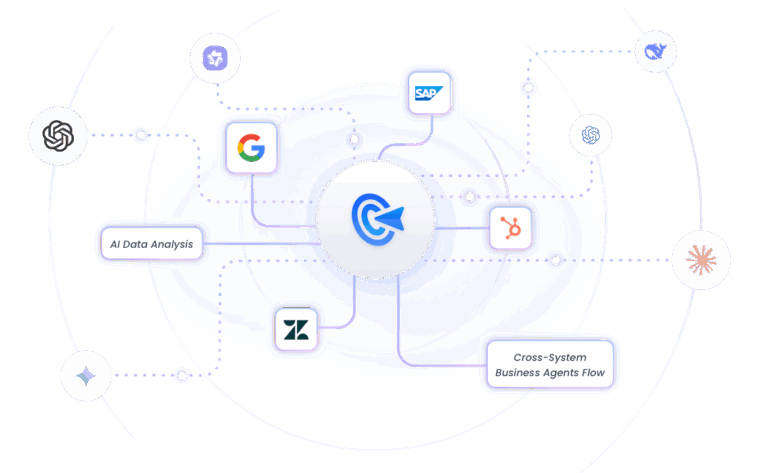
The use cases show how AI can streamline onboarding, but making the impact real requires the right platform. GoInsight.AI enables organizations to implement intelligent, multi-agent workflows seamlessly, providing all the core components needed to achieve truly smart employee onboarding.
Key Features:
- Unified AI Workflow Engine: Visual, end-to-end onboarding flows connect different systems, including HRIS, email, IT, and knowledge bases.
- Multi-Agent Collaboration: Separate agents work as a team in a shared context, handling complex activities like IT setup and policy Q&A.
- Human-in-the-Loop Governance: Critical steps pause for human oversight to ensure compliance and quality while routine tasks auto-execute.
- Security & Compliance: All data stays private, and every action is auditable with role-based access and the strictest compliance standards.
End-to-End Onboarding Journey with GoInsight
So, what does the AI employee onboarding process with GoInsight actually look like in practice? Let’s have a look.
- Before Day 1
- A candidate accepts an offer, and the onboarding agents generate a personalized preboarding checklist, create provisioning requests, set up system access, and schedule team introductions.
- Day 1
- The agents confirm account access, deliver role-specific orientation content, and connect the new hire with a mentor. Chatbots answer immediate questions while keeping human-in-the-loop for exceptions.
- Week 1
- One agent delivers role-specific training content and resources. Another initiates casual, pulse-check conversations to gauge early sentiment.
- Month 1
- Predictive indicators assess readiness and recommend next steps for development or remediation. HR gets consolidated analytics for continuous improvement with security and compliance logs included.
GoInsight cuts onboarding time by 50% and boosts employee satisfaction. For HR leaders considering AI onboarding at scale, GoInsight provides the practical next steps.
Start 30 Days Free TrialConclusion: The Future of Employee Onboarding
Over the years, automation tools streamlined repetitive employee onboarding activities. Now, artificial intelligence adds judgment, adaptability, and personalization to the onboarding process.
Using AI for employee onboarding marks a fundamental shift from an administrative checklist to a strategic, continuous, and tailored experience. AI agents accelerate productivity, strengthen compliance, and improve new hire retention, not to mention few administrative bottlenecks and clearer metrics for HR to act on.
Looking ahead, the intelligent agents deployed today lay the groundwork for moving AI beyond onboarding to support the full employee lifecycle, from performance management and internal mobility to succession planning and offboarding.
What steps will you take to modernize your employee onboarding process?
FAQs



Leave a Reply.