
- Deconstructing the 'How': The AI Engine That Powers Automation
- The Anatomy of the 80%: Which Queries Can AI Handle?
- The Strategic Playbook: A 5-Step Guide to Implementation
- The Vital 20%: The Irreplaceable Role of Human Agents
- How GoInsight.AI Help Enterprise to Implement AI Customer Support
- Case Study 1: E-commerce(Holiday Peak Customer Support)
- Case Study 2: SaaS Company(24/7 Tier-1 Technical Support)
- FAQs (Frequently Asked Questions)
Customer expectations are evolving fast. They not only expect instant responses and thoughtful engagement, but also seamless resolution across multiple social platforms. Charteris Partners reports that 75% of service teams saw record ticket volumes in 2024, while agent turnover rates are 30–40%, leading to massive hiring and training costs.
Enter Artificial Intelligence (AI) in customer service—a transformative solution capable of automating up to 80% of routine queries, thereby revolutionizing support operations. This article delves into the mechanisms behind AI-driven automation, identifies the types of queries AI can handle, showcases real-world applications, and provides a strategic guide for implementation.
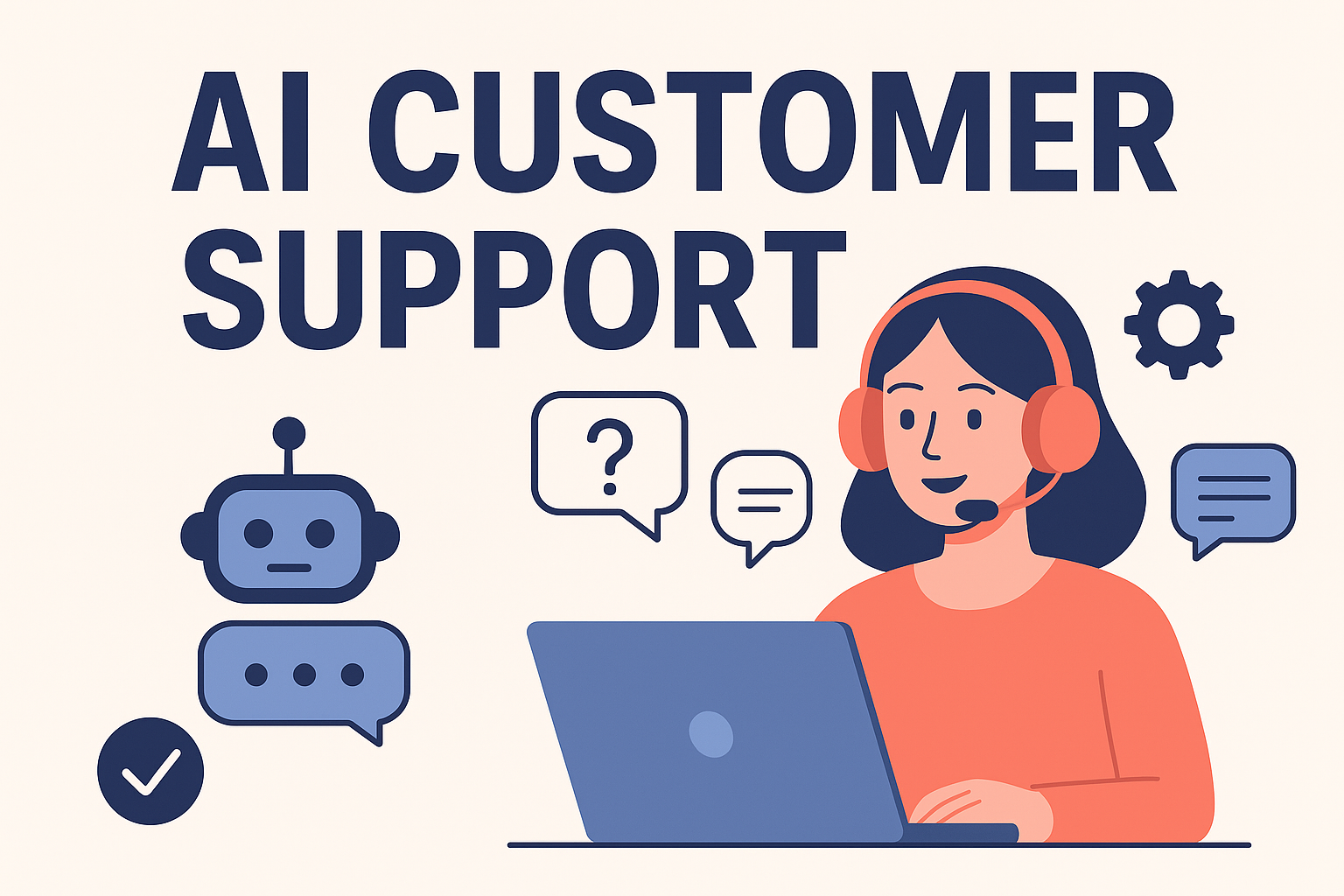
Deconstructing the 'How': The AI Engine That Powers Automation
Imagine an AI-driven customer service system as a "Digital Brain" comprising three integral components:
1: The Ears – Natural Language Processing (NLP/NLU)
NLP and Natural Language Understanding (NLU) enable AI to comprehend user intent, language nuances, typos, and sentiment. This goes beyond mere keyword matching; it's about grasping the underlying meaning of customer inquiries. For instance, AI can discern that "How do I change my password?" and "I forgot my password, what should I do?" both pertain to password reset assistance.
2: The Memory – The Centralized Knowledge Base
A robust, centralized knowledge base serves as the AI's repository of information, encompassing FAQs, product manuals, policies, and troubleshooting guides. The quality and comprehensiveness of this knowledge base are critical, as it directly influences the accuracy and relevance of AI-generated responses.
3: The Hands – Generative AI & Process Automation (RPA)
Generative AI (Large Language Models): These models craft human-like, contextually appropriate responses by drawing from the knowledge base.
Robotic Process Automation (RPA): RPA executes tasks across various systems, such as retrieving order statuses from Customer Relationship Management (CRM) platforms or processing refunds through payment gateways.
By integrating these components, AI systems can effectively understand, process, and respond to a vast array of customer queries.
The Anatomy of the 80%: Which Queries Can AI Handle?
AI excels at managing high-volume, low-complexity, and process-driven tasks. These tasks can be categorized into three tiers:
| Tier | Type of Query | Examples |
|---|---|---|
| 1 | Informational Queries (~40%) | "What are your business hours?", "What is your return policy?", "Where is my order?" |
| 2 | Navigational & How-To Queries (~25%) | "How do I reset my password?", "Where can I find my invoice?", "Guide me through setting up my account." |
| 3 | Simple Transactional Queries (~15%) | "Cancel my subscription," "Update my shipping address," "Book an appointment." |
Collectively, these tiers constitute the majority of repetitive queries that consume human agent time.
The Strategic Playbook: A 5-Step Guide to Implementation
Audit & Identify the 80%: Analyze current support tickets to pinpoint the most frequent and repetitive questions. This forms the foundation of your automation target list.
Build Your Knowledge Base: Consolidate all support documentation into a single, structured, and AI-ready format. The quality of this knowledge base is paramount to the success of AI implementation.
Choose the Right Platform: Select an AI vendor that aligns with your specific needs, considering factors such as integration capabilities, industry focus, and scalability. Prioritize partnerships that offer ongoing support and customization.
Phased Rollout & Training: Initiate a pilot program on a single channel (e.g., website chat) for a specific set of queries. Train both the AI system and human agents on the new workflow to ensure seamless integration.
Monitor, Iterate & Optimize: Utilize analytics to assess AI performance, identifying areas of success and those requiring improvement. Continuously refine the knowledge base and AI responses to enhance accuracy and relevance.
The Vital 20%: The Irreplaceable Role of Human Agents
While AI can handle a significant portion of customer inquiries, human agents remain indispensable for:
Complex, Multi-Step Issues: Problems that necessitate creative troubleshooting and nuanced understanding.
High-Empathy Situations: Interacting with frustrated, angry, or sensitive customers where emotional intelligence is crucial.
High-Value Customers: Building and maintaining relationships with strategic accounts that require personalized attention.
Ensuring a seamless handoff from AI to human agents is essential, with human agents having full context of the AI conversation to provide continuity and prevent customer frustration.
How GoInsight.AI Help Enterprise to Implement AI Customer Support
AI in customer service is hampered by disorganized data, integration issues, poor training, technical complexity, and security concerns, making implementation challenging.
To overcome these implementation barriers, try GoInsight.AI. It brings together the power of multi-agent AI collaboration, a private knowledge base, no-code editor, seamless system integration, and enterprise-grade security, all under one roof.
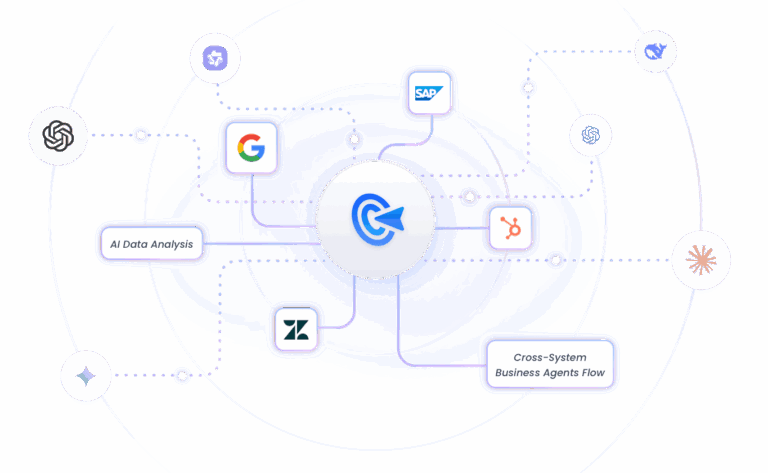
Designed for enterprises across industries, GoInsight empowers teams to automate complex workflows and enhance decision-making for the entire customer service process.
Case Study 1: E-commerce (Holiday Peak Customer Support)
Background: A large online retailer faces massive surges in customer inquiries during holiday campaigns.
Challenge: Peak-season demand pushed response times to ~10 minutes, hurting experience and increasing pressure on support teams. The business needed a way to scale service quality without simply scaling headcount—and still keep interactions consistent and compliant.
GoInsight.AI solution: The retailer used GoInsight.ai as an AI collaboration and automation workbench. A small group of Builders packaged proven support playbooks into reusable AI assistants and workflows, then published them for front-line Operators to use in a single workspace.
Agents could answer common questions with consistent tone and structure, and when needed, route work to the right internal process and leave an auditable execution trail. Usage and cost were tracked centrally to keep adoption and spending visible.
Results & impact: The AI chatbot handled 85% of peak-season queries, reduced response time from 10 minutes to instant, and improved CSAT by 15%.
Why GoInsight.ai: Ideal for high-volume customer operations where teams must scale fast, keep quality consistent, and turn best practices into repeatable workflows.
Case Study 2: SaaS Company (24/7 Tier-1 Technical Support)
Background: A SaaS provider needed always-on technical support while maintaining engineering focus on product reliability.
Challenge: Tier-1 "how-to" and feature questions consumed disproportionate support capacity and repeatedly interrupted senior engineers, slowing progress on complex bug fixes. The company also struggled to standardize answers across regions and shifts.
GoInsight.AI solution: With GoInsight.ai, a small Builder group worked with support leads to convert Tier-1 resolutions into structured AI assistants and guided workflows. Operators could invoke these capabilities directly in GoInsight Workspace during live tickets, ensuring consistent responses and clear handoff when escalation was needed.
Governance controls ensured only approved support flows were accessible, while usage analytics highlighted which topics drove the most volume—feeding a continuous improvement loop for both documentation and support playbooks.
Results & impact: Tier-1 support became effectively 24/7, and expert engineers reclaimed time to focus on complex issues, improving overall operational efficiency. (The customer did not disclose additional metrics.)
Why GoInsight.ai: Best suited for SaaS teams aiming to industrialize support knowledge, reduce interruption costs, and scale consistent service across time zones.
Conclusion: From Reactive Answers to Proactive Experiences
Incorporating AI into customer service operations enables businesses to automate up to 80% of routine queries, leveraging NLP, a robust knowledge base, and process automation. This not only reduces operational costs but also delivers instant, 24/7 support, empowering human agents to focus on complex issues that truly matter. Looking ahead, AI is poised to evolve from merely answering questions to predicting customer needs and proactively solving problems before they arise, further enhancing the customer experience.
The transition to intelligent customer service begins with a single step. Try GoInsight.AI today to schedule your personalized demo and discover how our platform can transform your customer support operations.
FAQs (Frequently Asked Questions)
Will this AI replace our human customer service agents?
No, AI is designed to augment human agents by handling routine inquiries, allowing them to concentrate on complex and high-value tasks. This shift can lead to skill development opportunities and increased job satisfaction among human agents.
How long does it take to get an AI system up and running?
The timeline varies but typically involves 2-4 weeks for knowledge base preparation and 4-6 weeks for pilot implementation. The quality of the knowledge base is a significant factor influencing the setup duration.
What happens when the AI doesn't know the answer or gets it wrong?
AI systems utilize a "confidence score" to assess the certainty of their responses. When confidence is low, the system should seamlessly escalate the query to a human agent, providing them with the full context of the interaction. Incorrect answers serve as valuable training data for continuous improvement of the AI system.
How can we ensure the AI's personality aligns with our brand voice?
Modern AI platforms offer customization capabilities, allowing businesses to define the AI's tone, language, and persona. This ensures a consistent brand experience across all customer touchpoints.





Leave a Reply.