
- Part 1: What Are AI Agents for HR
- HR AI Agent vs Traditional HR Automation
- Part 2: Why Your Business Needs HR AI Agents: 4 Key Benefits
- Part 3: Top 5 Practical Use Cases for AI Agents in HR
- 1. Recruitment & Talent Acquisition
- 2. Onboarding & Employee Support
- 3. Employee Engagement & Development
- 4. Performance Management Support
- 5. HR Operations & Analytics
- Part 4: GoInsight.AI: Your Go-To AI Tool for HR Transformation
- Part 5: Future Trends of AI in HR
- FAQs about AI Agents for HR
HR teams are tasked with managing endless spreadsheets and repetitive onboarding tasks to processing employee queries and compliance paperwork. Luckily, this imbalance is shifting rapidly with the adoption of AI agents in HR.
The share of HR leaders who are actively planning or already deploying GenAI has jumped from 19% in June 2023 to 61% by June 2025. By all indicators, this trend is likely to continue in the future. From AI in recruitment to AI tools that personalize workplace interactions, the new generation of HR automation is redefining how organizations attract, support, and retain talent.
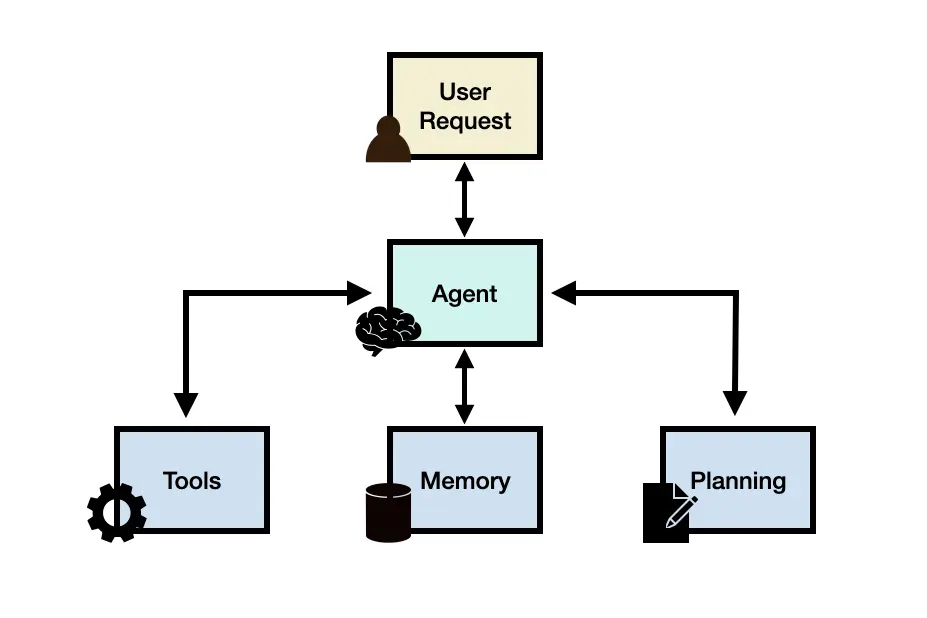
So, the question stands: What are AI agents in HR, and how to leverage their potential in your business? And that's what brings us here today.
Part 1: What Are AI Agents for HR
AI Agents for HR are autonomous, intelligent systems powered by machine learning (ML), natural language processing (NLP), and GenAI to make reasoned decisions and execute multi-step workflows.
In the field of human resources, these agents operate as virtual HR assistants that can access HR systems to answer employee questions, schedule interviews and onboarding, and handle routine administrative tasks like payroll and benefits.
The idea is to enable HR teams to focus on human-centric issues by handling the time-consuming and repetitive work.
Example: In AI-driven recruitment, an HR AI Agent can:
- Screen thousands of resumes.
- Assess candidate fit based on role-specific parameters.
- Engage qualified candidates via personalized messages.
- Schedule interviews by coordinating calendars across candidates and hiring managers.
- Assist the successful candidate by initiating paperwork and provisioning tasks.
HR AI Agent vs Traditional HR Automation
Both HR AI agents and traditional HR automation aim to simplify HR processes. Yet, the core difference lies in intelligence and adaptability. Traditional automation systems follow a static "if-this-then-that" principle, while AI Agents leverage advanced learning capabilities to make dynamic and context-aware decisions.
The table below clears out things for you:
| Aspect | Traditional HR Automation | AI Agents for HR |
|---|---|---|
| Working | Follows "if X, then Y" rules programmed by a human. If an employee submits a form, then send an email to their manager. | Once trained, they understand a high-level goal and figure out the steps to achieve it. |
| Functionality | Executes repetitive, rule-based tasks like sending offer letters. | Performs intelligent, multi-step processes like candidate evaluation and performance prediction. |
| Flexibility | Static. It cannot handle scenarios outside its pre-defined rules. | Dynamic and adaptive. Learns from historical data, identifies patterns, and adapts over time to organizational needs. |
| Decision-making | Based on predefined workflows with no learning ability. | Can provide a tailored, supportive experience, like a 24/7 HR assistant. |
| Scalability | Requires frequent manual updates to handle new cases. | Continuously improves and scales automatically as it learns. |
Part 2: Why Your Business Needs HR AI Agents: 4 Key Benefits
Coming to the main part: what tangible value do AI Agents in HR bring to your business? Here are the four biggest advantages your business can gain by harnessing the power of AI in HR:
1. Automating Repetitive Work
HR teams spend countless hours managing administrative tasks, from scheduling interviews and processing payroll to updating employee records and handling leave requests. All this can be managed by AI agents with precision and speed.
Through HR workflow automation, AI agents ensure that tasks move seamlessly without manual intervention or bottlenecks.
Outcome: The HR professionals get valuable hours to focus on strategic initiatives such as talent development, culture building, and organizational growth.
2. Enhance the Employee Experience
A positive, seamless employee experience is crucial for engagement, productivity, and retention. AI agents act as personalized assistants to provide employees with instant access to the company's information they need.
They also analyze sentiment from feedback, emails, or surveys to detect frustration or disengagement early. Based on this data, they recommend the necessary intervention to the HR teams to maximize employee wellness.
Outcome: This creates a supportive, responsive, and modern work environment with a more engaged and motivated workforce.
3. Drive Smarter Decisions with Data-Driven Insights
Traditional HR reporting tells you what happened. But AI Agents in HR can analyze data to tell you what is likely to happen and what you should do about it. This helps companies make data-driven decisions that are faster, more accurate, and strategically aligned.
Outcome: HR leaders gain timely, actionable insights that drive better workforce planning and higher organizational performance.
4. Reduce Operational Costs and Minimize Errors
Manual HR operations are not only slow, but they also frequently make mistakes that lead to compliance issues and financial loss.
But not anymore.
HR AI Agents significantly cut costs by automating high-volume tasks like interview scheduling, data entry, and payroll processing. Furthermore, AI Agents drastically reduce human errors such as miscalculated PTO, incorrect benefit enrollments, or compliance oversights.
Outcome: Lower operational costs, higher accuracy, and a more efficient HR department that contributes directly to business profitability.
To put it simply, AI Agents don't just automate work, they rather elevate the entire HR functionality.
Part 3: Top 5 Practical Use Cases for AI Agents in HR
AI-driven HR automation is fast becoming the backbone of modern businesses to handle complex, people-centric tasks. Let's explore the top five use cases where AI Agents are creating a tangible impact:
1. Recruitment & Talent Acquisition
Recruiting top talent is one of HR's biggest challenges, as it involves screening thousands of applicants. However, a smart AI agent can manage the entire top-of-the-funnel recruitment workflow. It can:
- Assisting a hiring manager in drafting a compelling job description based on the team's needs.
- Proactively screen incoming resumes against the key skills and experience, and automatically reject unqualified candidates.
- For the shortlisted candidates, it accesses calendars for multiple interviewers, proposes available time slots to candidates, and sends a confirmation email and shortlists the top matches.
Example: IBM's Watsonx Orchestrate can automate candidate shortlisting and communication workflows. Companies like Mastercard have used such automation to reduce interview scheduling time by over 85%.
2. Onboarding & Employee Support
Once hired, new employees often face information overload. AI Agents simplify this process through personalized guidance and real-time support.
AI onboarding assistants can:
- Send interactive onboarding checklists.
- Guide employees through policy forms and IT setups.
- Offer self-service support for HR-related queries 24/7
Example: IBM's AskHR handles over 2.1 million conversations annually with IBM employees. It automates more than 80 common tasks like vacation requests and providing instant answers to policy questions, while automatically routing complex cases to the right HR representative.
3. Employee Engagement & Development
Retaining top talent requires proactive engagement and clear career paths. AI Agents are now central to nurturing engagement and continuous learning by:
- Monitoring sentiment from employee surveys, emails, or feedback tools.
- Recommending personalized learning paths or internal mobility options to motivated employees.
Example: Powered by AI, Microsoft Viva Insights analyzes collaboration data from Teams and Outlook to identify burnout risks, suggest focus time, and recommend work–life balance improvements.
4. Performance Management Support
Performance reviews are often subjective and inconsistent. Moving from an annual, backward-looking review cycle to continuous, forward-looking coaching is a key HR goal. AI Agents for HR facilitate this shift by bringing real-time insights and actionable intelligence into the process.
They can:
- Draft performance review summaries by compiling feedback from peers, KPIs, project data, and self-assessments.
- Highlight skill gaps and suggest training resources.
- Assist managers in setting data-backed goals and monitoring progress
Example: GE's "PD@GE" app utilizes AI and data analytics to provide managers and employees with ongoing performance insights. This marks a significant shift from the traditional annual review to a fluid, continuous conversation supported by data.
5. HR Operations & Analytics
This is the strategic backbone where AI Agents transform HR from a reactive cost center into a proactive, data-driven function. In this regard, HR AI agents can:
AI Agents can:
- Validate payroll data, detect anomalies, and ensure compliance with tax laws.
- Handle compensation inquiries from employees automatically.
- Generate predictive analytics on workforce costs, overtime trends, and budget forecasts.
Example: IBM Watsonx Orchestrate is designed explicitly to automate digital workflows. It can handle tasks like running compliance reports, gathering data for audits, and managing employee data changes effortlessly.
Part 4: GoInsight.AI: Your Go-To AI Tool for HR Transformation
In the age of intelligent automation, enterprises need an integrated platform that connects people, processes, and data into one cohesive ecosystem. Try GoInsight.AI.
It is an enterprise-grade AI collaboration and automation platform designed to design, deploy, and manage intelligent agents across all departments. These custom AI agents can seamlessly integrate into your business HR workflows to transform strategic vision into operational reality.
How GoInsight.AI Empowers HR Transformation
This modern software brings human-in-the-loop to align cutting-edge AI technology with proven human practices. The goal is to navigate key HR issues such as repetitive employee inquiries, complex approval workflows, and data security concerns.
Here's how GoInsight.AI offers a comprehensive toolkit to transform HR AI Agents across enterprise systems:
- Collaborative Intelligence Workspace: HR, IT, and AI collaborate in real-time, transforming HR work into data-driven decisions.
- Integration with Tools & Systems: Connects AI to your HR tech stack, enabling real-time data action from systems.
- Multi-Agent Collaboration: Supports task coordination across domains, enabling intelligent workflow automation.
- Secure Enterprise Knowledge Base: Centralizes HR knowledge to ensure accurate, compliant responses tailored to your organization.
- Enterprise-Grade Security & Compliance: Ensures data protection with encryption and compliance.
Best Practices for Deploying AI Agents for HR: Tips to Follow
To get the most out of HR AI agents, you should:
1. Train HR teams on AI capabilities
Empower HR professionals with a hands-on understanding of AI tools and dashboards to enhance collaboration and confidence in automation.
2. Incorporate a Human in the Loop
Blend automation with human oversight to ensure fairness, empathy, and contextual judgment in critical HR decisions. Luckily, GoInsight.AI comes with a built-in human-in-the-loop feature to combine AI capabilities with human judgment.
3. Monitor, Scale, and Continuously Improve
Leverage GoInsight.AI's Usage Dashboard to monitor performance, identify improvement areas, and scale AI agents as your organization grows. Unlike its competitors, GoInsight.ai has a friendly and highly efficient dashboard that provides real-time analytics of the entire AI automation landscape.
4. Start Small, Iterate, and Expand Strategically
Begin with targeted workflows, such as recruitment or employee support. This demonstrates quick value and provides a blueprint for broader deployment. Once the AI agent is well-trained, gradually extend automation across HR operations for sustainable impact.
Part 5: Future Trends of AI in HR
The use of AI in human resources is set to evolve from a helpful assistant into a more adaptive, predictive, and ethical system.
Here are three key trends shaping the future of AI Agents for HR:
1. Continued Growth in Adoption
The rapid shift toward AI in HR shows no signs of slowing down. As more organizations witness measurable gains in productivity, accuracy, and employee satisfaction, AI adoption will become the norm for even small and medium-sized businesses.
2. Demand for Skill Enhancement
As AI Agents automate administrative tasks, the role of the HR professional will fundamentally elevate. This creates a critical and growing demand for new skills within HR teams, such as:
- AI literacy and prompt engineering: Knowing how to effectively communicate with and manage AI systems to achieve desired outcomes.
- Data analysis and interpretation: Moving beyond generating reports to deriving strategic insights from the data analyzed by AI agents.
- Mastering human-AI collab: HR professionals must know how to guide, train, and supervise AI systems for effective "human–AI collaboration."
3. Focus on Ethics and Compliance
As AI becomes more embedded in HR operations, concerns around ethics, transparency, and data security will intensify. The future will demand responsible AI deployment guided by fairness and compliance.
HR departments will collaborate closely with IT and legal teams to ensure all AI-driven actions meet GDPR, EEOC, and local labor regulations.
FAQs about AI Agents for HR
Q1. Will AI agents replace HR jobs?
No. AI agents are designed to assist, not replace, HR professionals. They handle repetitive and data-heavy tasks like resume screening or payroll queries, while the HR teams get to focus on higher-value work such as talent strategy and culture development.
Q2. How secure is our sensitive employee data?
Security is a top priority in all AI HR systems. Reputable platforms use end-to-end encryption, access control, and anonymization techniques to protect employee data. Plus, they should also implement role-based access and regular audits to maintain full control over sensitive HR information.
Q3. How long does it take to build and deploy our first HR agent?
For small-scale use cases, like automating leave requests or answering FAQs, an HR AI agent can be deployed within 2–4 weeks.
For enterprise-level integrations involving recruitment, payroll, or analytics, the process may take 2–3 months, including testing and customization. Use GoInsight.AI to quickly train and deploy your smart AI agent for HR.
Q4. Can these agents integrate with our existing HR systems?
Yes. Most AI Agents for HR are built to integrate with popular HR software such as Workday, SAP SuccessFactors, Oracle Fusion Cloud, and BambooHR. Through APIs and automation connectors, they can read and act on data across systems without disrupting existing workflows.
Thank You





Leave a Reply.